Promotional calendars do something most giveaways can’t: people hang them up on purpose and check them again and again. A pen gets pocketed, and a tote goes in the closet, but a calendar lands on a wall or desk and becomes part of how someone plans their week. Your logo, phone number, and website ride along for every glance.
That repeat visibility is why September is the month to plan yours. If you’re wondering whether branded calendars still make sense when everyone carries a phone, this guide covers what the research says, which formats fit which audience, the 2026-2027 design directions, an honest look at ROI, and the calendar printing timeline you need to hit before the holidays.
Why Promotional Calendars Work
Calendars earn their place through repeat use, not one-time reach. In the Advertising Specialty Institute’s (ASI) 2019 Global Ad Impressions Study, 62% of U.S. consumers owned a promotional calendar, 52% kept those calendars a year or longer, and 31% of Millennials and Gen X recipients used theirs daily.
ASI’s research has also long pointed to calendars as the item to choose when you want customers to use something for reference, like looking up a name or phone number.
WHY CALENDARS KEEP WORKING
62%
Owned a promotional calendar in the 2019 study
52%
Kept their promotional calendar for a year or longer
673
Lifetime impressions per calendar in ASI’s 2023 study
1.5¢
Cost per impression for a $10 wall calendar in 2023
The cost side is favorable, too. ASI’s 2023 study put the cost per impression for a $10, 12-month wall calendar at about 1.5 cents. That edition counted roughly 673 lifetime impressions per calendar, versus 850 in 2019, and 25% of consumers said they’d be more likely to do business with an advertiser that gave them a logoed calendar.
Calendars aren’t the highest-reach item, though. In the 2019 data, a calendar generated roughly 850 lifetime impressions, well behind outerwear at 6,100, because it lives in one room.
Instead, it offers frequency: the same household or office team sees your name again and again, which suits a local business or a long-term client relationship.
Who benefits most from promotional calendars?
Businesses built on repeat and referral customers are the natural fit for promotional calendars: insurance agents, real estate offices, dental and medical practices, home-service companies, credit unions, and nonprofits.
If your customers return once a year, a calendar gives you twelve months of presence in between. If you sell mostly one-off, impulse purchases, a lower-cost item may fit better.
There’s a catch. In that same 2019 study, calendars had the shortest average keep time of any product measured, about eight months, and 48% of people who didn’t want one threw it away, compared with 37% who passed it along. A calendar only works if it’s worth keeping, and that’s a design question.
Calendar Types & Styles
Promotional calendars come in several formats, and each reaches people in a different place, so match the format to the audience.
Our 2027 lineup includes four.
FOR WALLS & SHARED SPACES
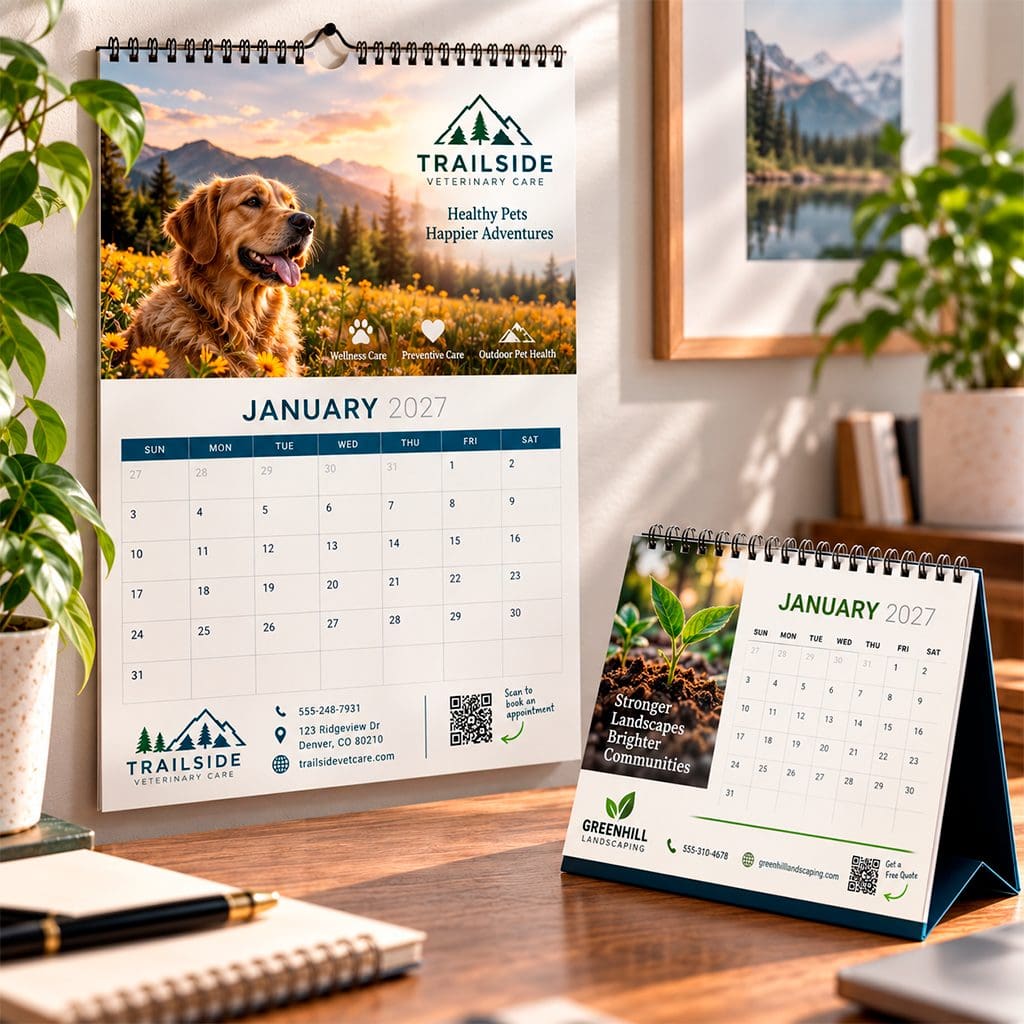
Wall Calendars
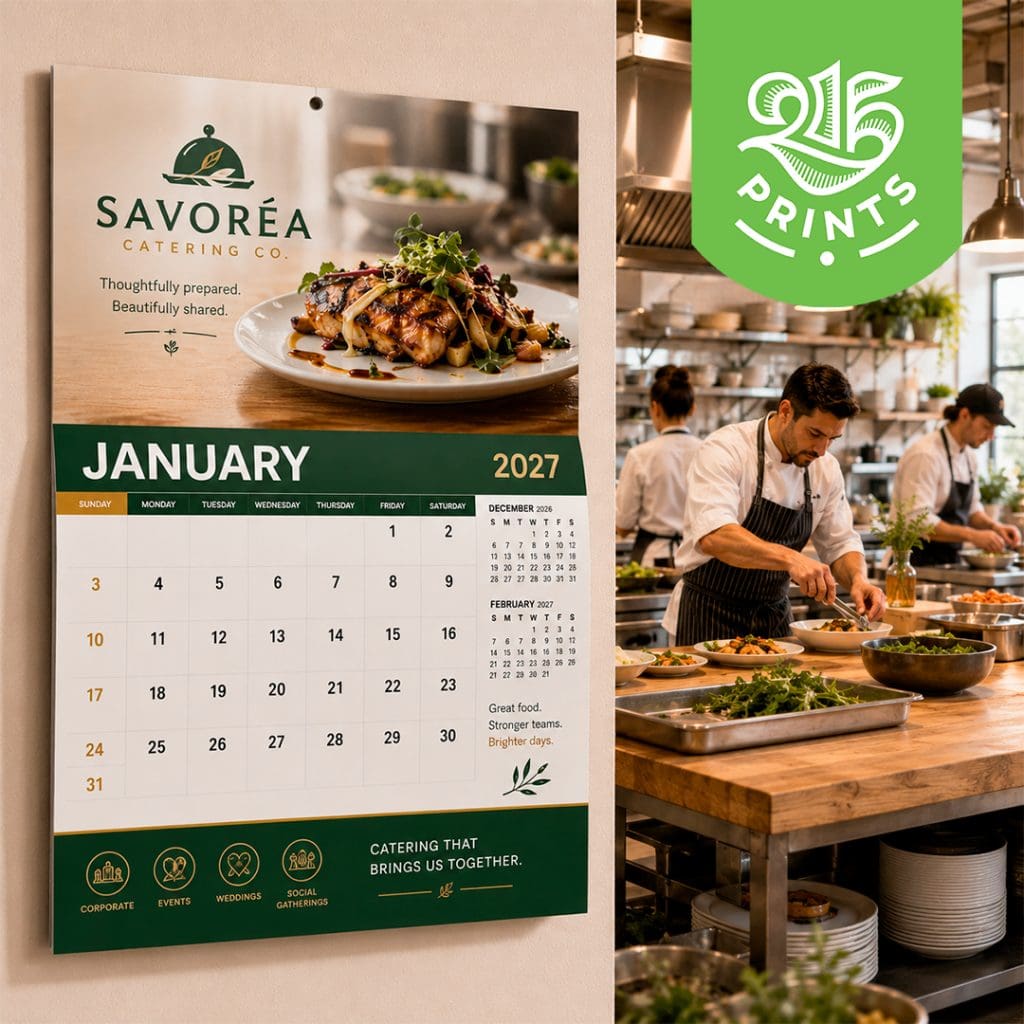
The classic. Twelve large pages let you run a different image, tip, or offer each month, which gives people a reason to keep turning the page. They suit homes, break rooms, and reception areas.
FOR DESKS & OFFICES
Desk Calendars
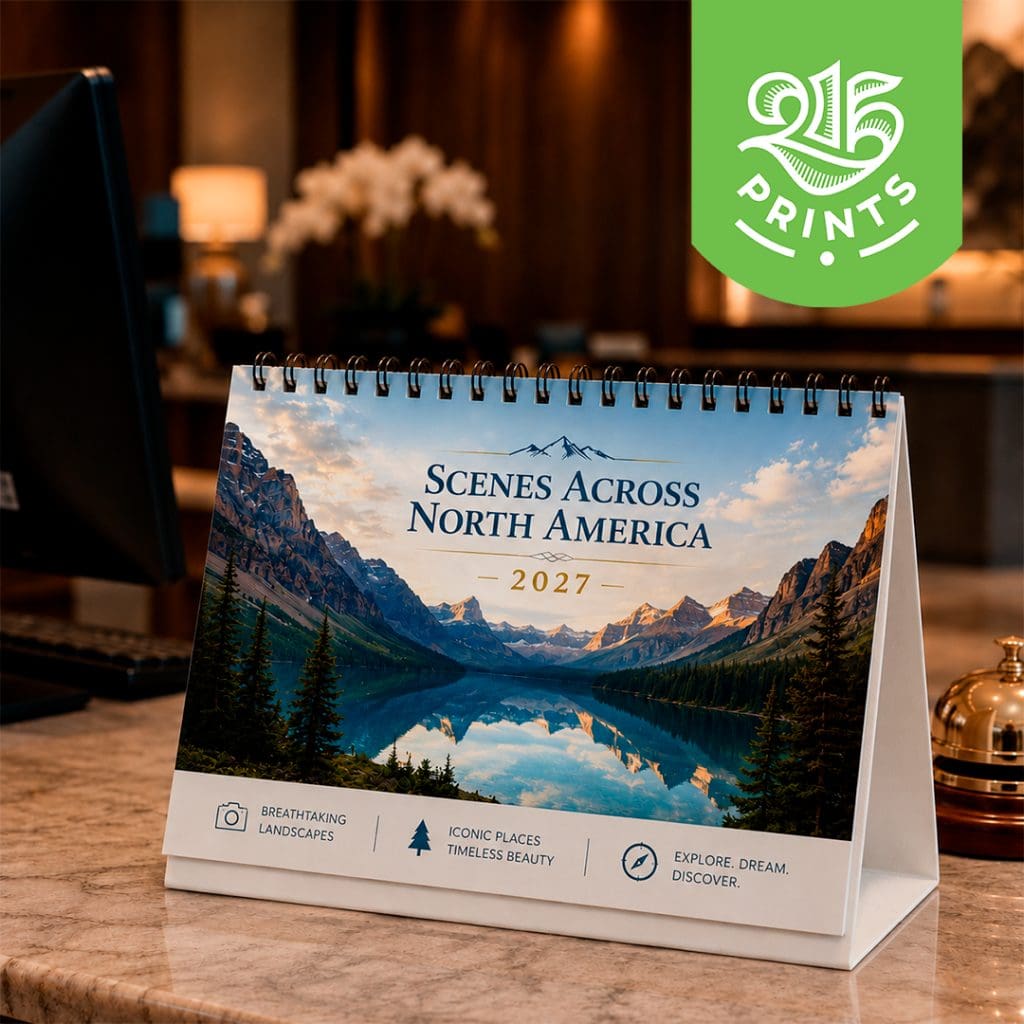
Tent-style and desk-pad formats sit within arm’s reach, which makes them a natural fit for office clients, vendors, and referral partners. The smaller footprint means your message needs to be tighter.
FOR REFRIGERATORS
Magnetic Calendars
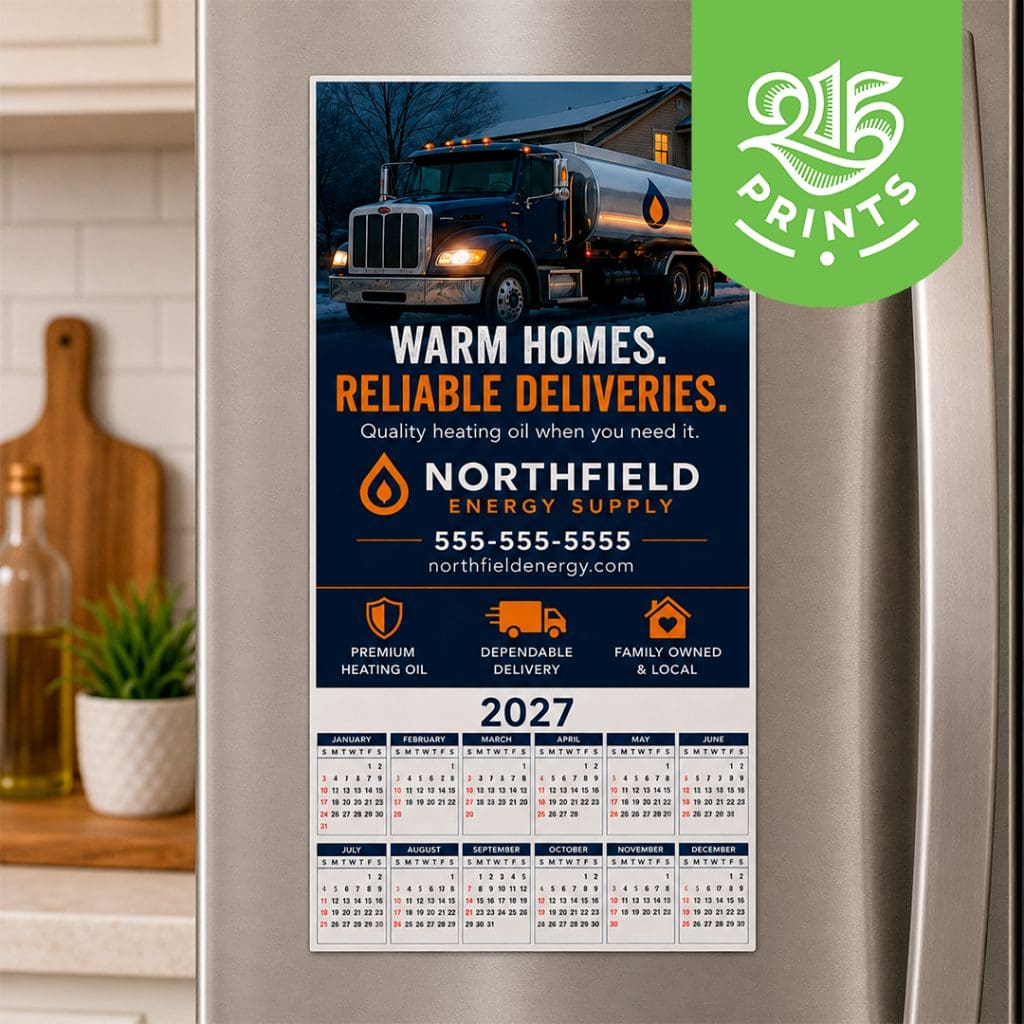
Built for the refrigerator, where households look when they need a number fast. Service businesses like plumbers, HVAC companies, and dental offices get the most from putting a phone number exactly there.
FOR HANDOUTS & COUNTERS
Tear-Off Calendar Magnets
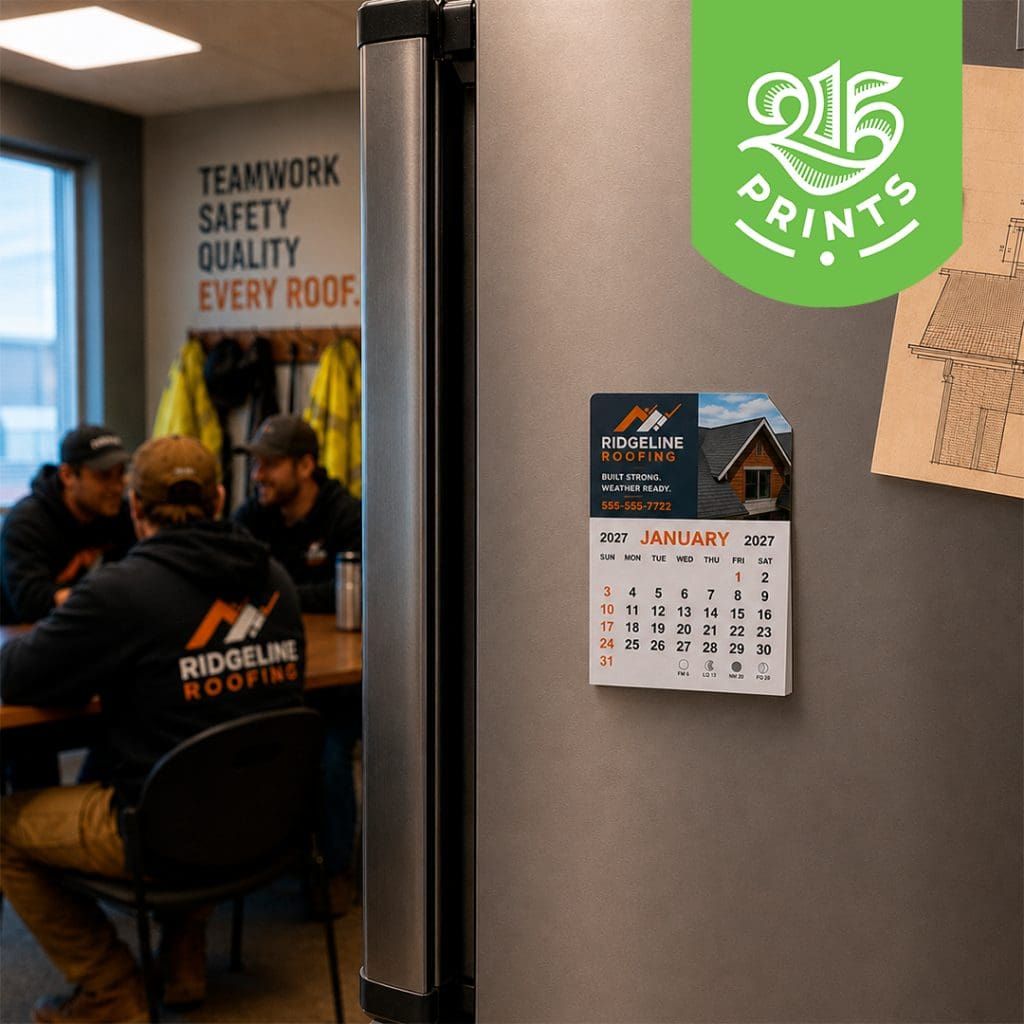
A custom magnetic header holds a monthly tear-off pad, so your name stays put while the month changes. They work well on refrigerators and filing cabinets, and they’re easy to hand out at counters and events.
For promotional calendar giveaways, a simple rule works: use magnetic and tear-off formats for events, counters, and mailings, and save wall and desk calendars for the clients and prospects you want to keep close.
2026-2027 Design Trends
Looking across 2027 calendar collections and templates, a few calendar design ideas keep surfacing for promotional calendars:
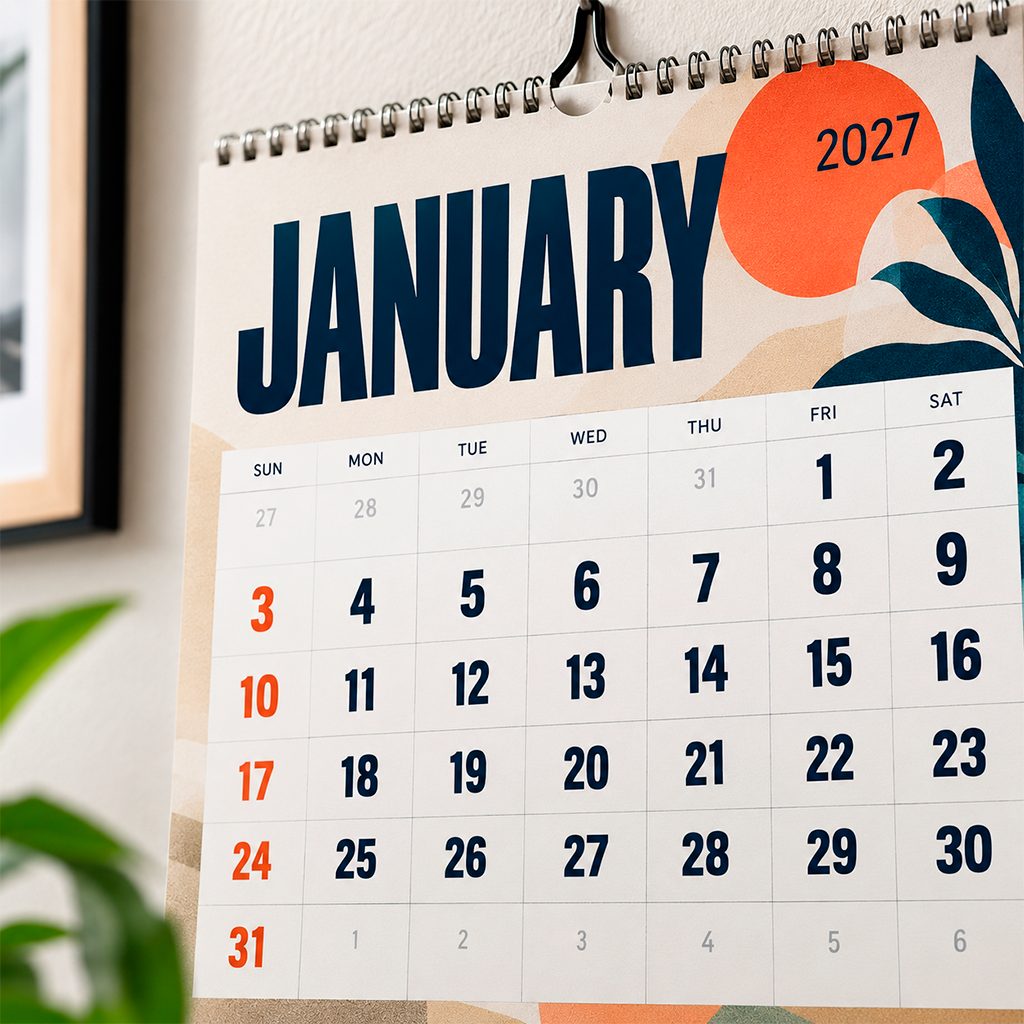
01 / READABILITY
Bold Typography
Oversized numerals and heavy type make a calendar readable from across a room and give it a modern, poster-like look.
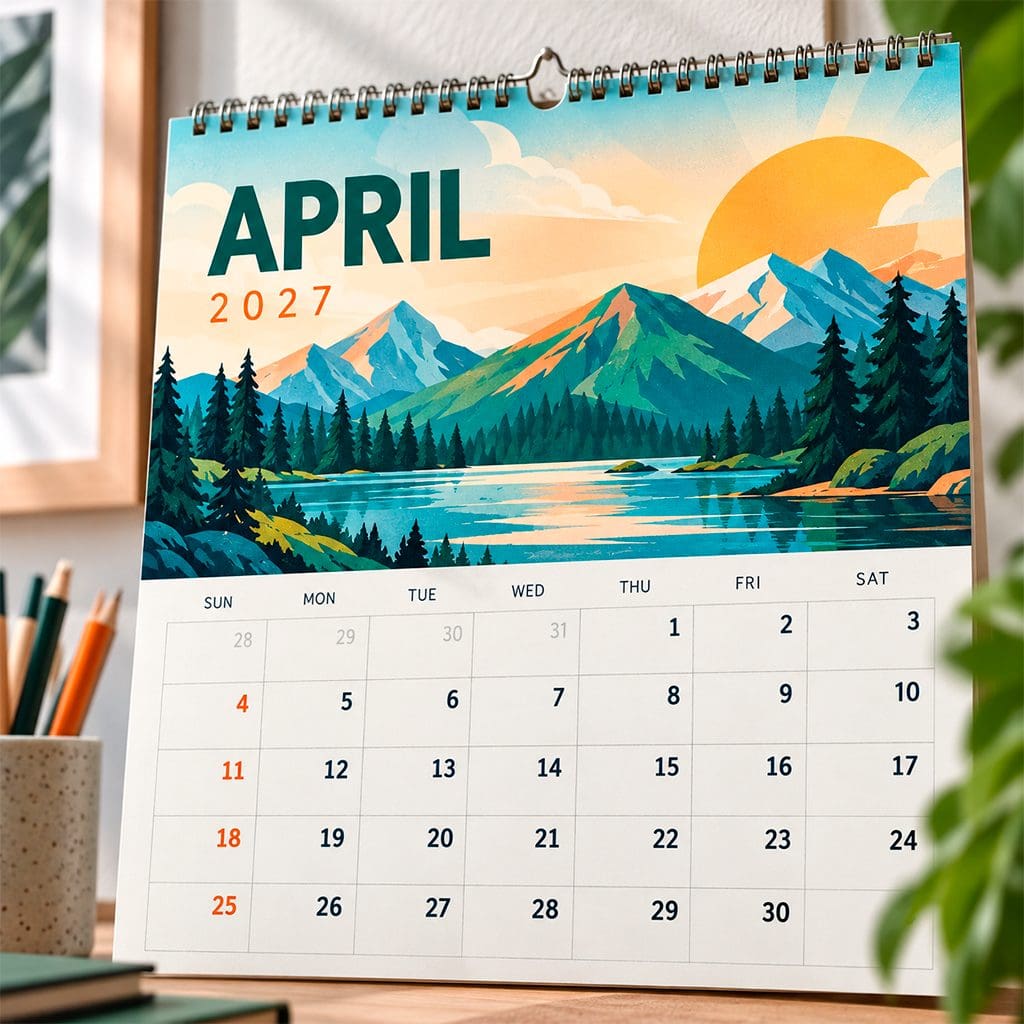
02 / ORIGINALITY
Illustration Over Stock Photos
Original illustrated or abstract art gives a calendar a look no competitor can copy, and it signals care.
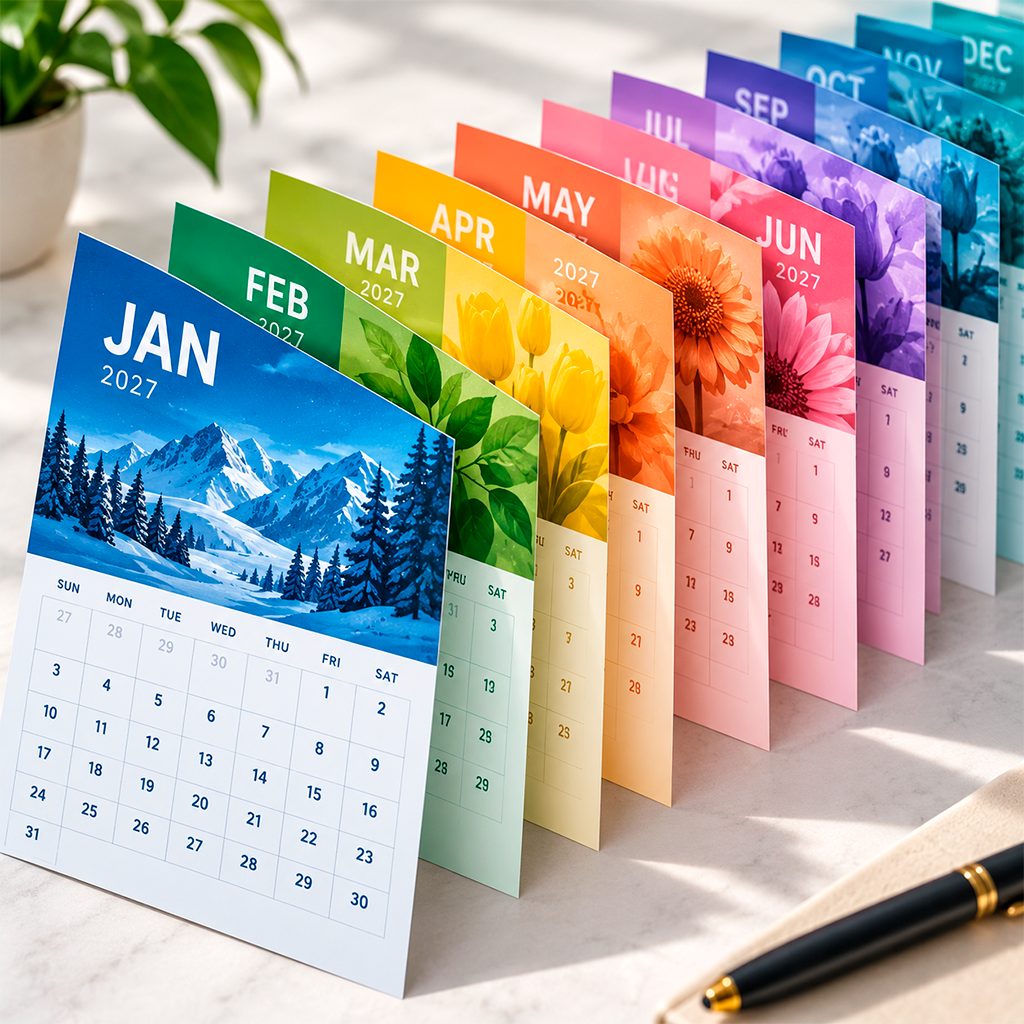
03 / VARIETY
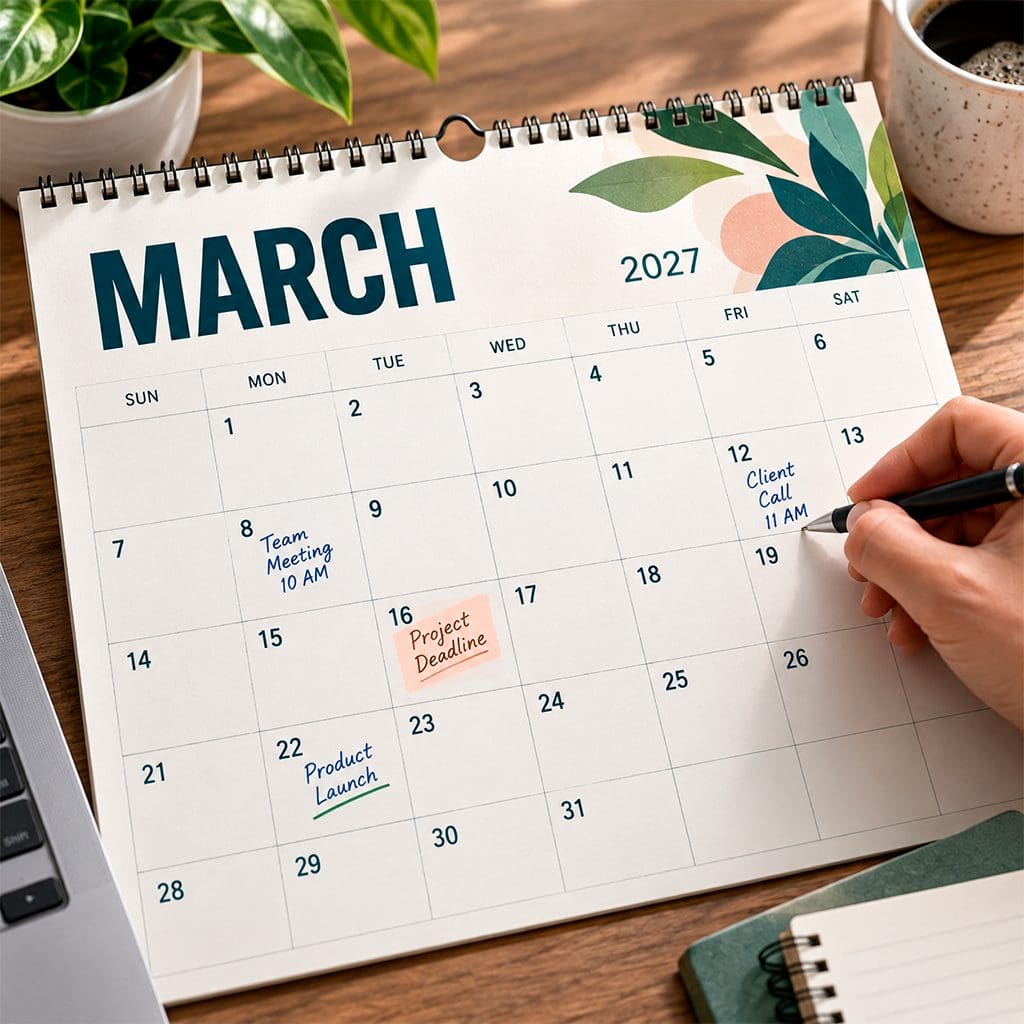
One Color Per Month
Assigning each month its own hue keeps the calendar fresh as the year moves.
04 / FUNCTION
Function-First Grids
Wide date squares, room to write, and clear week-start markers matter most for people who actually use their calendar, which is the audience you want.
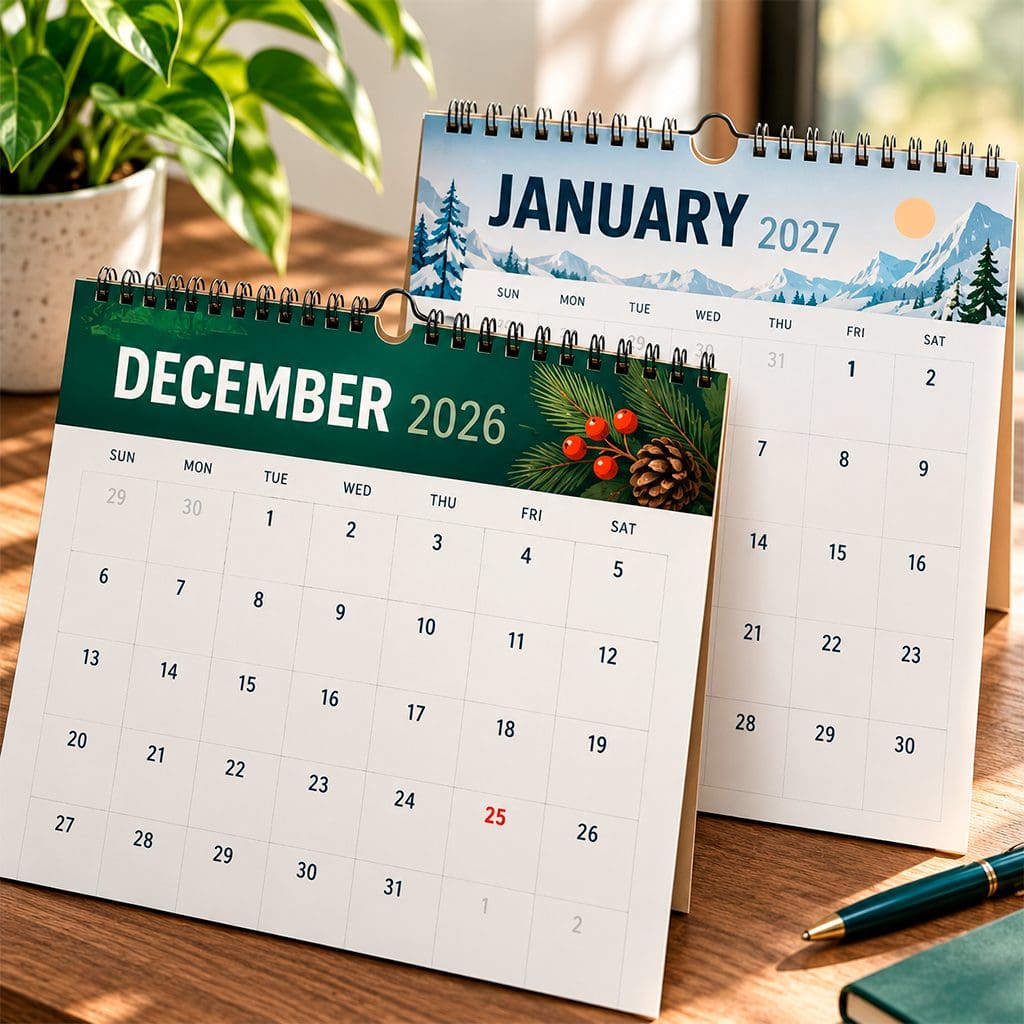
05 / LONGEVITY
Longer Runs
Thirteen-month layouts that include the prior December mean the calendar is useful the day it arrives.
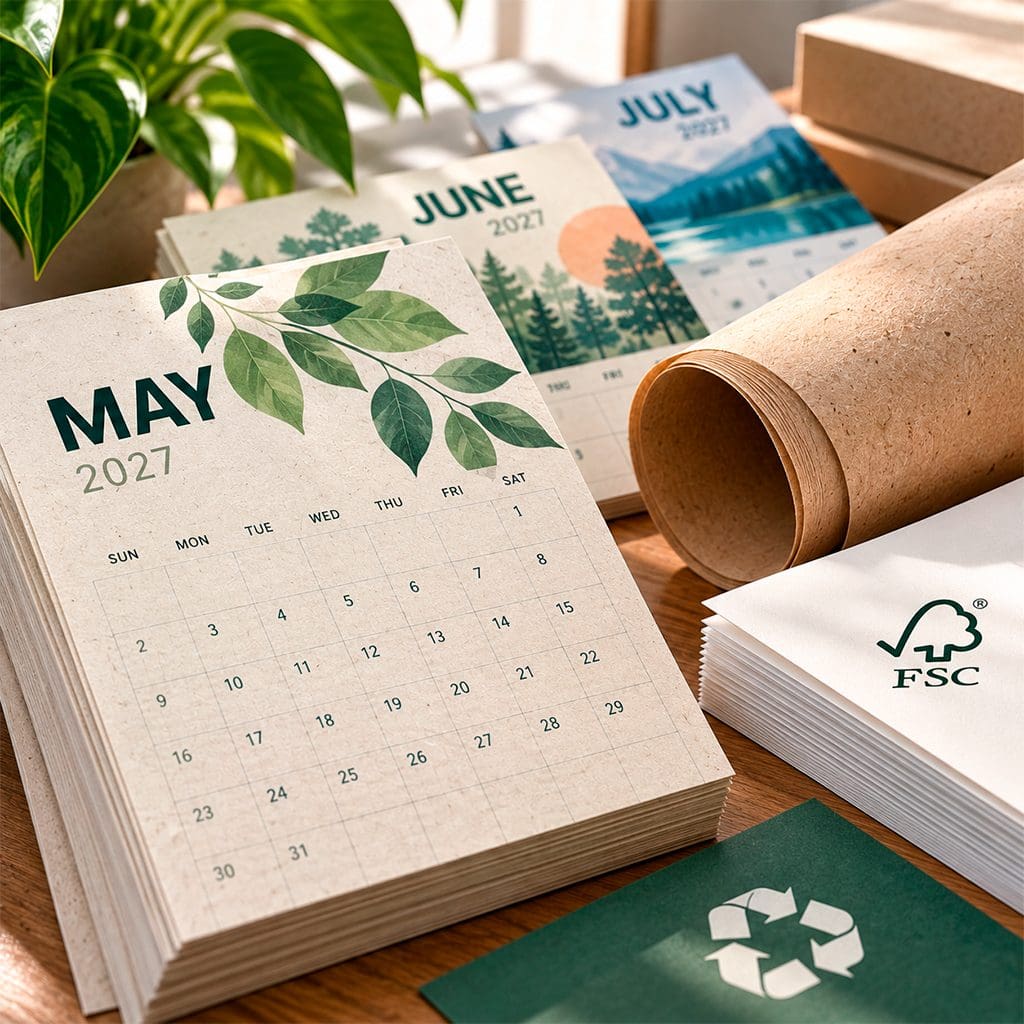
06 / MATERIALS
Sustainable Stock
Recycled and FSC-certified paper is widely available, and in ASI’s 2019 study, 42% of U.S. consumers had a more favorable opinion of an advertiser whose promotional product was environmentally friendly.
How to approach custom calendar design
Good custom calendar design comes down to four decisions:
Decide where it will live.
Bold, image-led art suits a wall; tidy planner layouts suit a desk. Picture the room before you lock the artwork.
Make the grid usable.
If people can’t write in it, they’ll buy one that they can.
Brand every month, lightly.
Keep your logo, phone number, and URL on each page, sized so they never fight the dates. A QR code to a dedicated landing page also makes results trackable.
Give each month a reason to flip.
A seasonal tip, a local event, a limited-time offer, or a customer photo turns a static page into something people look forward to.
A Real ROI Example
Published dollar-return figures for promotional calendars are scarce. Most reported results are referrals and repeat business, not revenue.
Here are two documented examples and a benchmark-based estimate you can rerun with your own numbers.
A personalized calendar program that lasted.
In a case study, Taylor, an insurance company, runs a personalized wall-calendar program in which policyholders’ names appear in the monthly photos. Taylor produces 100,000 of them a year; the program was still running five years in, and Taylor reports that policyholders call to ask when the new calendar will arrive.
No revenue figure is published, but a program that customers request by name is a strong retention signal.
A desk calendar instead of a business card.
A local insurance agent profiled by Target One Marketing Group handed out desk calendars at local events, two per visitor, asking each person to share one. The agent reported growth in referrals and new customers.
No figures were published.
CALENDAR ROI IN PRACTICE
What could a 500-calendar campaign look like?
ORDER
500 calendars
UNIT COST
$10 each
TOTAL SPEND
$5,000
At ASI’s 2023 benchmark of 1.5 cents per impression, that’s about 333,000 impressions over the calendars’ lifetime.
$5,000 spend → 5 customers × $1,000 value = break even
To break even, the campaign only needs to win customers whose combined value tops $5,000, for example, five customers worth $1,000 each. Your numbers will differ, so swap in your own price and customer value. A lower unit cost lowers the cost per impression: ASI’s 2019 edition put a $3 calendar at about three-tenths of a cent.
To measure your own results, put a dedicated phone number, URL, or QR code on the calendar, or add a different offer code to each month.
Ordering Timeline: Calendar Printing Deadlines
Calendars are typically distributed between November and January, so working backward from your handout date protects you from the holiday rush.
A realistic schedule looks like this:
LATE SEPTEMBER
Plan the calendar
Choose your format and quantity, pick a design direction, and gather your logo, photos, and monthly copy.
EARLY OCTOBER
Finalize and review
Finalize the design and review. Check dates, the start month, and every phone number and URL before sending to print.
PRODUCTION
Production begins
Check the product page and our turnaround information for your format. The stated turnaround covers production only, and shipping can add up to one business day.
LATE OCTOBER TO EARLY NOVEMBER
Calendars arrive
Calendars arrive, leaving buffer for any delay and time to prep mailings and client visits.
LATE NOVEMBER THROUGH DECEMBER
Distribute before year-end
Distribute before year-end so recipients hang them up before January 1.
Turn times aren’t guaranteed, so if your order is time-sensitive, contact us before you place it. Ordering extra is also smart, since last-minute requests always come in.
Calendars also pair well with the rest of our printing services, and if you’re planning other seasonal giveaways, our guide to back-to-school promotional products covers items people use every day.
Ready to get started?
Request a calendar printing quote → and we’ll help you build a calendar people want to keep.
Promotional calendars succeed when they’re useful, well designed, and timed right. The research supports a low cost per impression, and one in four consumers say they’d be more likely to do business with an advertiser that gave them a logoed calendar.
The documented examples show what that looks like in practice: policyholders asking when the next edition arrives, and a local agent turning calendar handouts into referrals.
Whether you choose branded calendars for clients or promotional calendars for a community giveaway, the fundamentals are the same. Pick a format that matches where your audience spends time, borrow the calendar design ideas that suit your brand, and start early.