A small business guide to vehicle graphics, design costs, and ROI
A single wrapped vehicle generates an estimated 30,000 to 60,000 visual impressions a week just by driving its normal routes, which is more than most local businesses get from a month of paid social ads. That number is the main argument for vehicle wrap design, and it’s a strong one. It only holds up, though, if the wrap actually functions as a mobile billboard, and plenty of them don’t.
Walk through any parking lot, and you’ll spot the problem cases: a car wrap with six fonts competing for attention, a phone number in 8-point type that nobody could read from the next lane, a logo lost under a photo of the product. Those vehicles still collect the impressions. They just waste them.
FROM VEHICLE TO MOBILE BILLBOARD
This guide covers what separates a wrap that turns heads from an expensive paint job. It covers wrap types and costs, design principles that survive highway speed, mistakes that ruin readability, and a real example of what a well-designed wrap can return.
Types of Vehicle Wraps
Not every vehicle needs full coverage. The right choice usually comes down to budget and how much of the vehicle you want working as vehicle graphics rather than staying factory paint.
01 / MAXIMUM COVERAGE
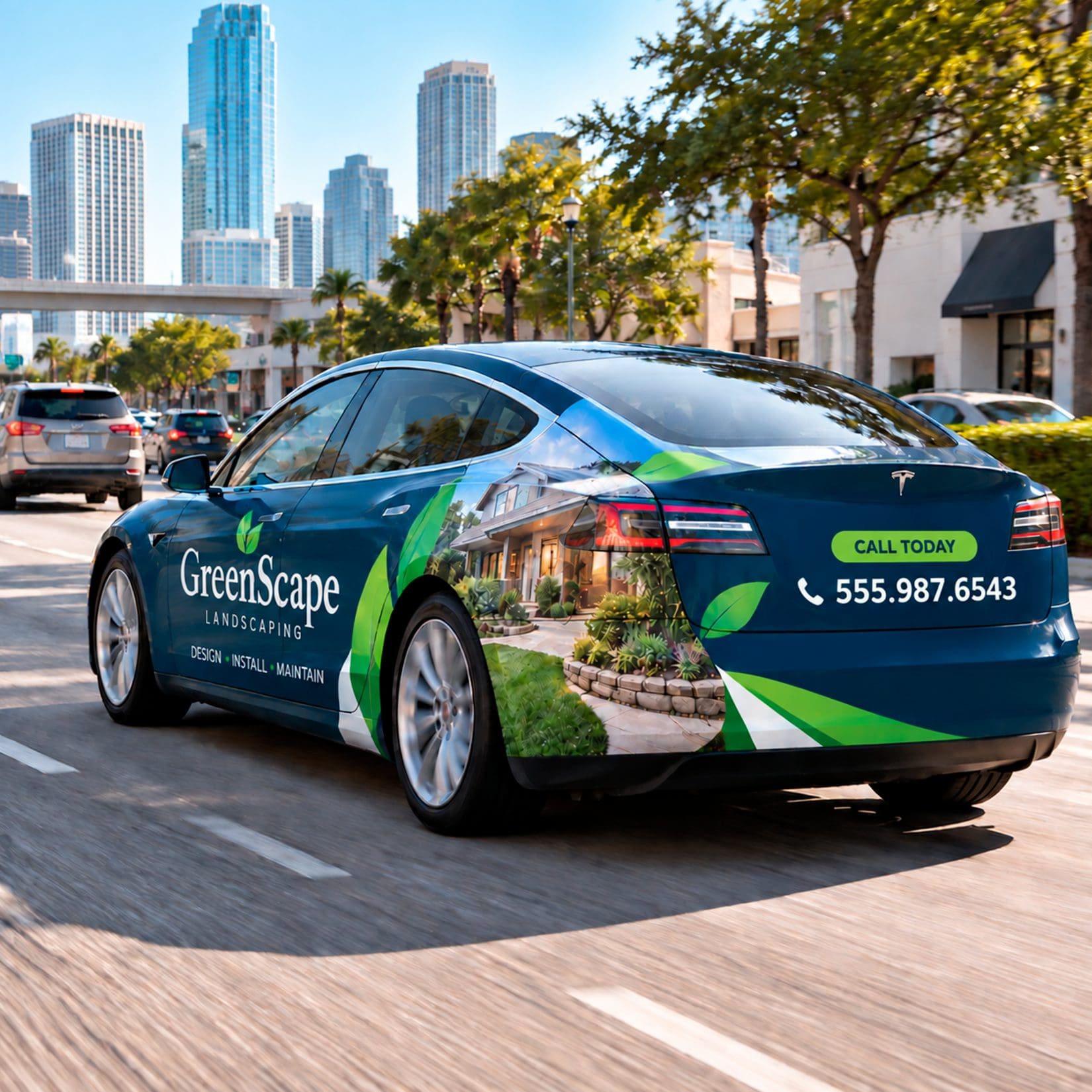
Full wraps
Full wraps cover the entire vehicle in printed vinyl, including the roof and rear panels. This is the most complete branding option and the most expensive, and it gives the design team the most surface area to work with. That helps if you want the vehicle itself to be the ad rather than just a place to stick one.
02 / BRANDING WITHOUT FULL COVERAGE
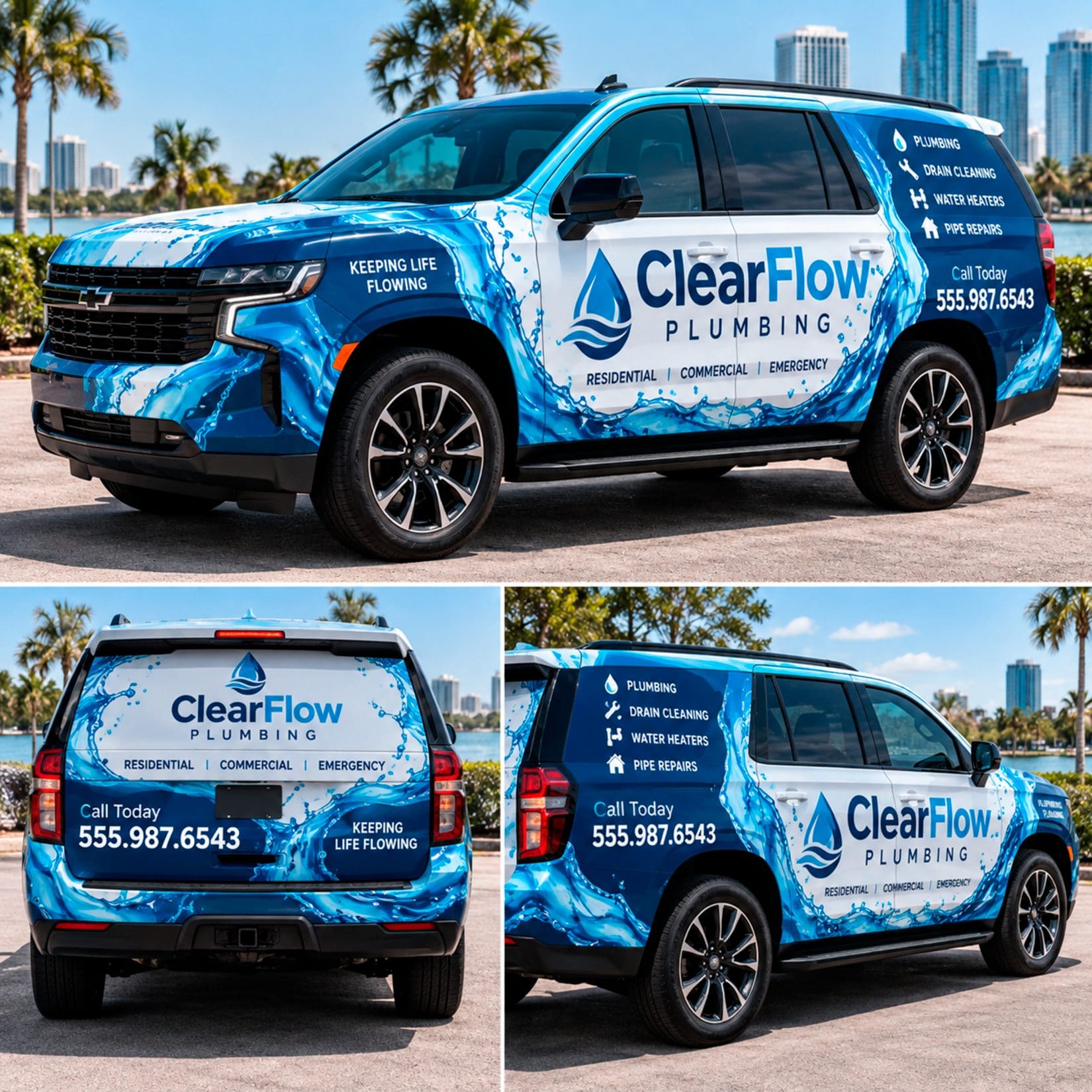
Partial wraps
Partial wraps cover specific sections such as the doors, side panels, and the tailgate or rear window area, while the rest stays factory paint, often in a color that matches or complements the wrap. This is the most common choice for small business fleets, since it delivers strong car branding for a fraction of what a full wrap costs.
03 / USE THE GLASS
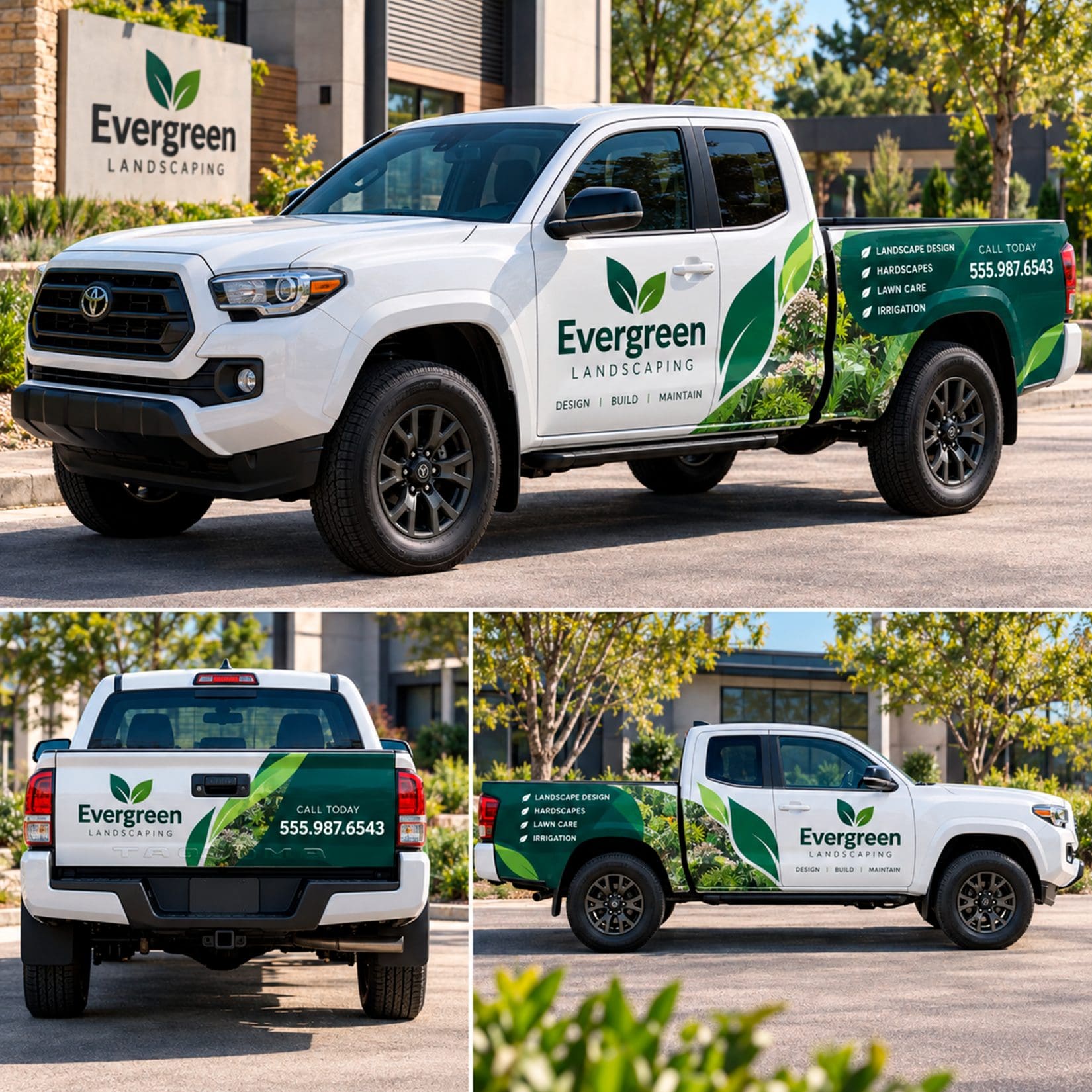
Window graphics
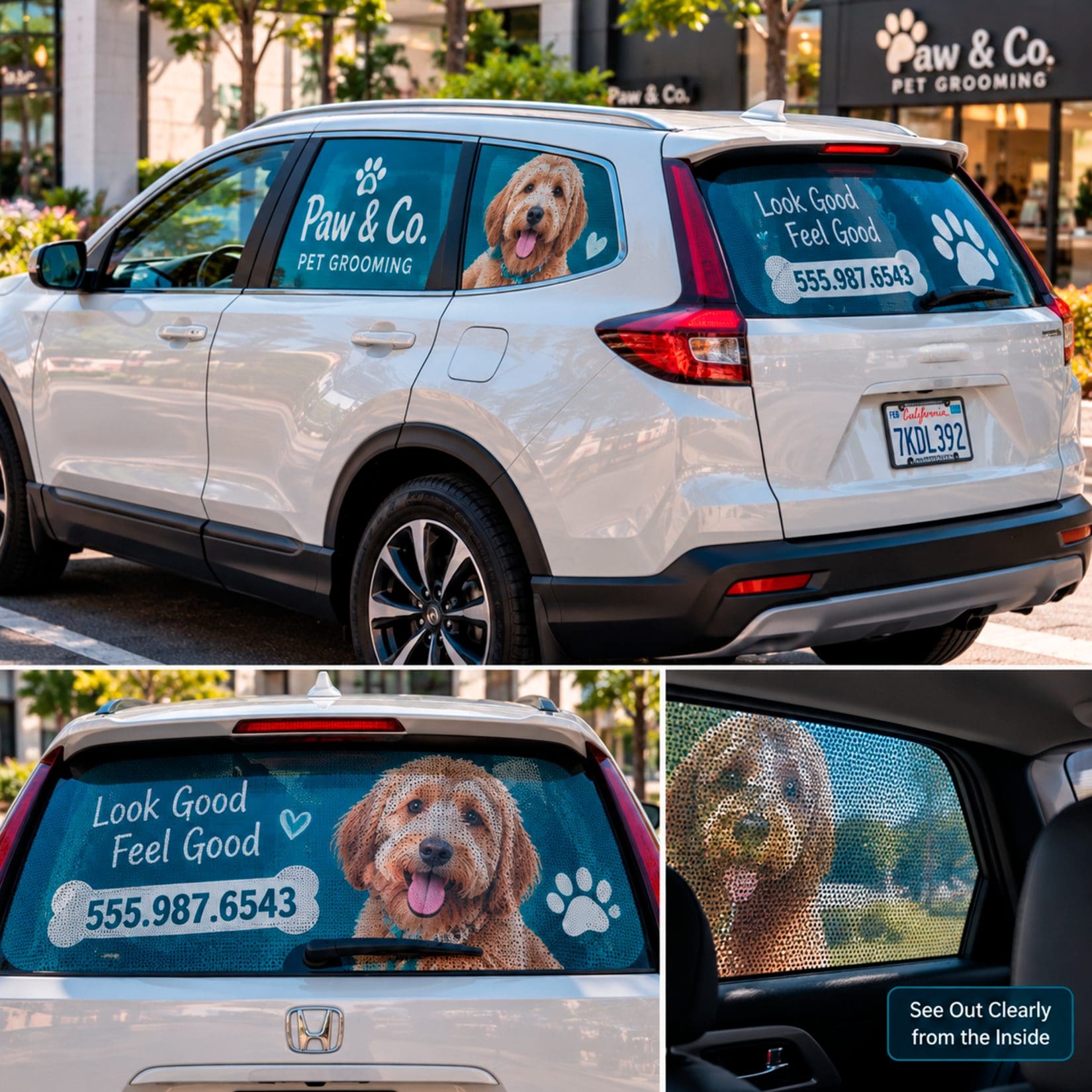
Window graphics are their own category. Perforated vinyl lets the driver see out while showing an image or message to people outside, which makes it a good spot for a phone number or tagline. Local regulations often limit how much of a windshield or side window you can cover, so check the rules before you finalize a design.
VEHICLE WRAP COST AT A GLANCE
Compare Your Wrap Options
FULL COVERAGE
Full Wrap
TYPICAL COST
$2,500–$5,000+
BEST FOR
Fleet vehicles, delivery vans, primary marketing vehicles
SELECTIVE COVERAGE
Partial Wrap
TYPICAL COST
$900–$2,500
BEST FOR
Service trucks, single-vehicle small businesses
WINDOWS ONLY
Window Graphics
TYPICAL COST
$150–$600
BEST FOR
Contact info, taglines, retail storefront vehicles
Cost ranges are general estimates. Vehicle size, coverage, vinyl material, design complexity, installation, and location can all affect the final price.
ANOTHER WAY TO BRAND YOUR VEHICLE
Not ready for a full wrap?
Vehicle branding can also focus on specific surfaces. See-through window decals can turn rear glass into advertising space, while tailgate decals and van stickers add branding to high-visibility body panels without covering the entire vehicle.
Vehicle Wrap Design Best Practices
Whatever wrap type you pick, the same fundamentals decide whether the design earns a second look or gets ignored at the light.
Color selection for visibility
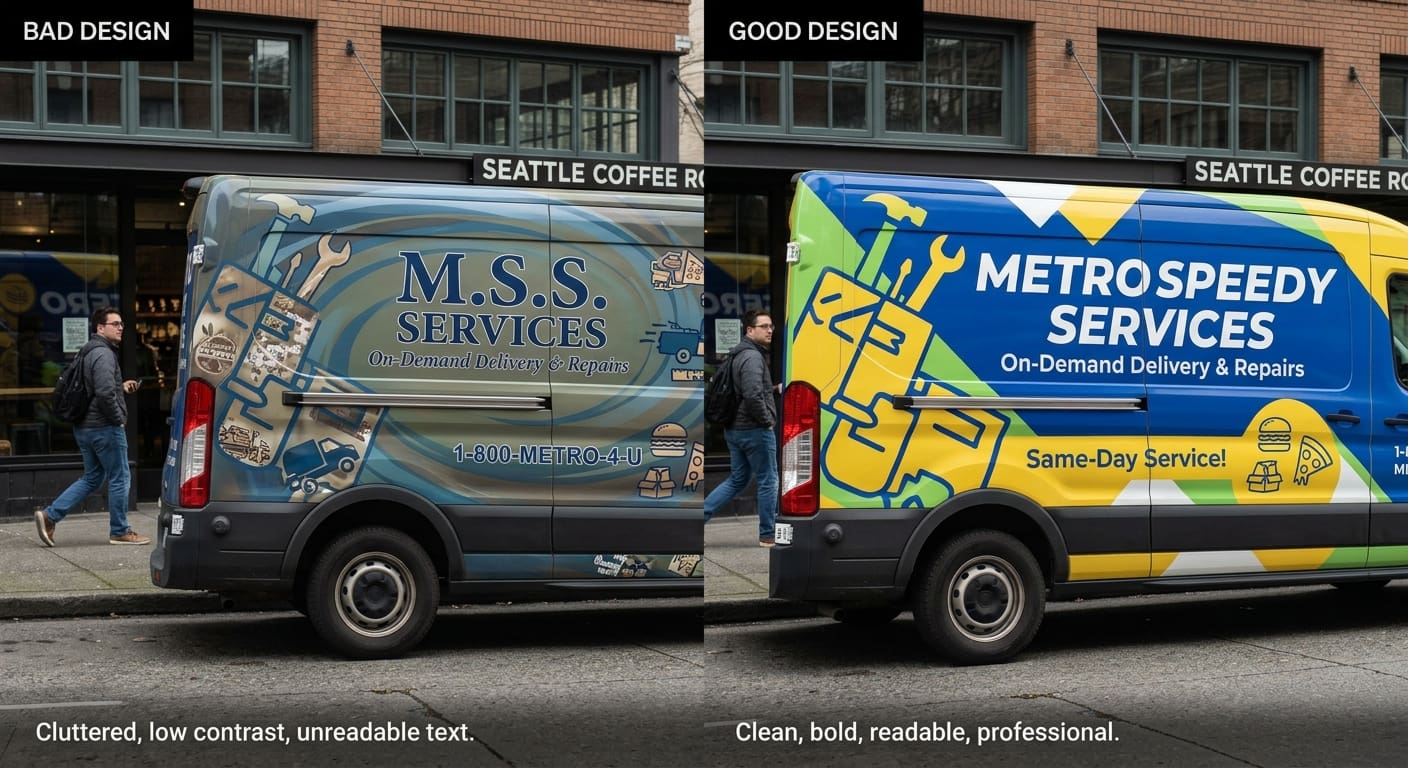
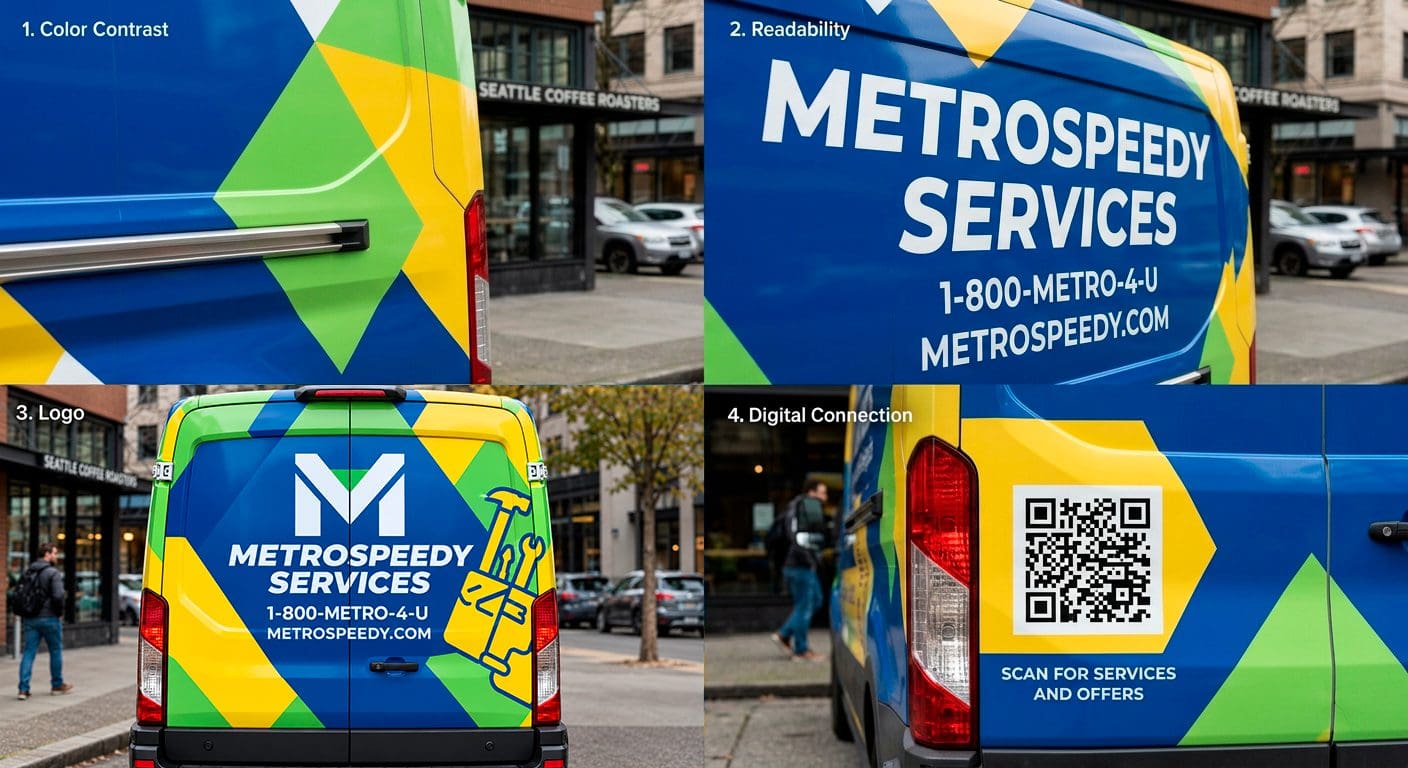
High-contrast color combinations read fastest from a moving vehicle: dark text on a bright background, or the reverse. Avoid low-contrast pairings like navy on black or pastel on pastel, which look fine in a design mockup on your monitor but disappear in direct sunlight or at dusk.
Bold, saturated colors also photograph better. That matters more than it might seem, because a wrapped vehicle in a parking lot or at an event usually ends up in someone’s phone.
Typography: size and legibility at 60 mph
A driver or pedestrian gets roughly two to three seconds to take in a passing vehicle. Primary text, meaning the business name or main message, has to be large enough to read from 50 feet away.
A common rule of thumb is at least 3 inches of letter height for every 10 feet of intended reading distance. Avoid script fonts and thin strokes, which blur at speed and vanish in low light. One clean, bold sans-serif for the main message reads faster than a mix of decorative fonts.
Placement: work with the vehicle
Design around door handles, gas caps, seams, and window trim instead of running text across them. A phone number split by a door seam is a phone number nobody can read.
Windows, mirrors, and headlights are usually off-limits by regulation and should stay uncovered anyway. Good advertising vehicle wrap design treats the body panels as a canvas with real obstacles, not a blank rectangle.
Logo and branding
The logo should be big enough to recognize at a glance and placed somewhere consistent. Most designers anchor it near the front quarter panel or door, where it stays visible whether the vehicle is parked, driving past, or photographed from the side.
Keep the logo’s proportions and colors consistent with your other branded materials. A wrap that looks like a different company than your storefront or business cards works against the recognition you’re trying to build.
Contact information
Put the phone number and website on the rear and side panels, since those are the two views other drivers see most. Keep the text simple: a phone number, a URL, maybe a one-line description of what you do.
Leave off the email address and social handles. Nobody memorizes them at 60 mph, and the extra text just slows down the two things people can actually use in the moment.
Images: high-resolution requirements
Any photo or graphic on a wrap needs to be print-ready at 300 DPI at full output size. A low-resolution image that looks fine on screen goes pixelated and blurry once it’s blown up to cover a door panel.
Vector files (AI, EPS, SVG) are best for logos and text because they scale to any size without losing quality. Save raster images (JPG, PNG) at the largest resolution you have, and let your print partner confirm they’ll hold at full scale before production.
The Vehicle Wrap Design Mistakes to Avoid
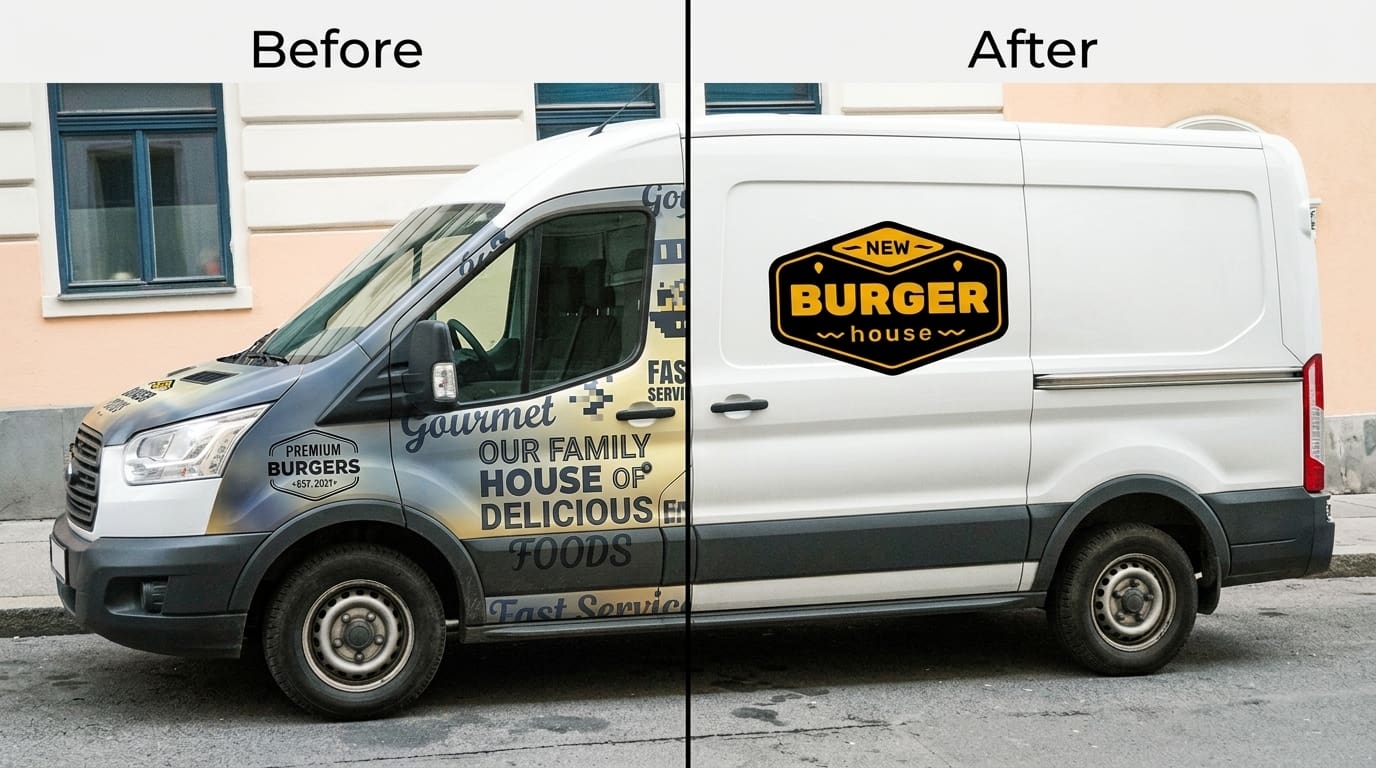
Underperforming wraps tend to share a few problems. The most common is too much text or a cluttered layout, where every extra message competes with the others, and a driver reading five things reads none of them well.
Poor color contrast is close behind, since a design that tests fine indoors under studio lighting can wash out completely in direct sun. Illegible fonts are another one, especially thin or script typefaces used for anything beyond a small accent, which lose their impact the moment the vehicle moves.
Low-quality images cause the rest: stretched logos, pixelated photos, and screenshots used as source art make an otherwise strong design look unprofessional at any distance.
Real-World Data on Vehicle Wrap ROI
Published research backs the cost-per-impression case for vehicle wraps. Per 3M’s Graphics & Signage research page, fleet graphics can cost as little as $0.15 per thousand impressions, compared with up to $21 per thousand for online ads. Over a year, even modest daily visibility adds up to real reach. (Source: Outdoor Advertising Association of America, via 3M)
VEHICLE WRAP ROI BY THE NUMBERS
$0.15
As little as per 1,000 fleet graphic impressions
4×
Nearly more online activations per ad dollar from OOH
64%
Of respondents said they noticed vehicle graphics
30K–70K
Estimated daily impressions per wrapped vehicle
That efficiency shows up beyond raw impressions. Out-of-home advertising, the category vehicle wraps fall under, generates nearly four times more online activations per ad dollar than TV, radio, or print (Nielsen Out-of-Home Online Activation Survey, 2017). A dollar spent on outdoor media has been found to return roughly three dollars in sales, a higher rate of return than most other advertising formats (OAAA).
Adding OOH to a broader campaign also helps other channels: one study found it lifted the ROI of search advertising by 40% and print by 14% (OOH ROI & Media Mix Optimization Report, OAAA, 2018).
Visibility research supports the case directly. In a Nielsen survey, 64% of respondents said they noticed vehicle graphics (Nielsen Out-of-Home Advertising Study, 2019), and separate research estimates vehicle advertising at 30,000 to 70,000 daily impressions per vehicle (“Measuring the Value of Vehicle Wraps,” ARD Ventures, 2003, via 3M).
Even at the low end of that range, one wrapped vehicle can reach millions of impressions a year, at a cost you pay once instead of every month, like most advertising channels a small business competes for.
PUT YOUR VEHICLE TO WORK
Choose the Right Vehicle Graphics
Ready to put your vehicle to work? Choose the surface that fits your vehicle and your coverage needs, from see-through window graphics to tailgate decals and custom van stickers.
FOR VEHICLE WINDOWS
See-Through Decals
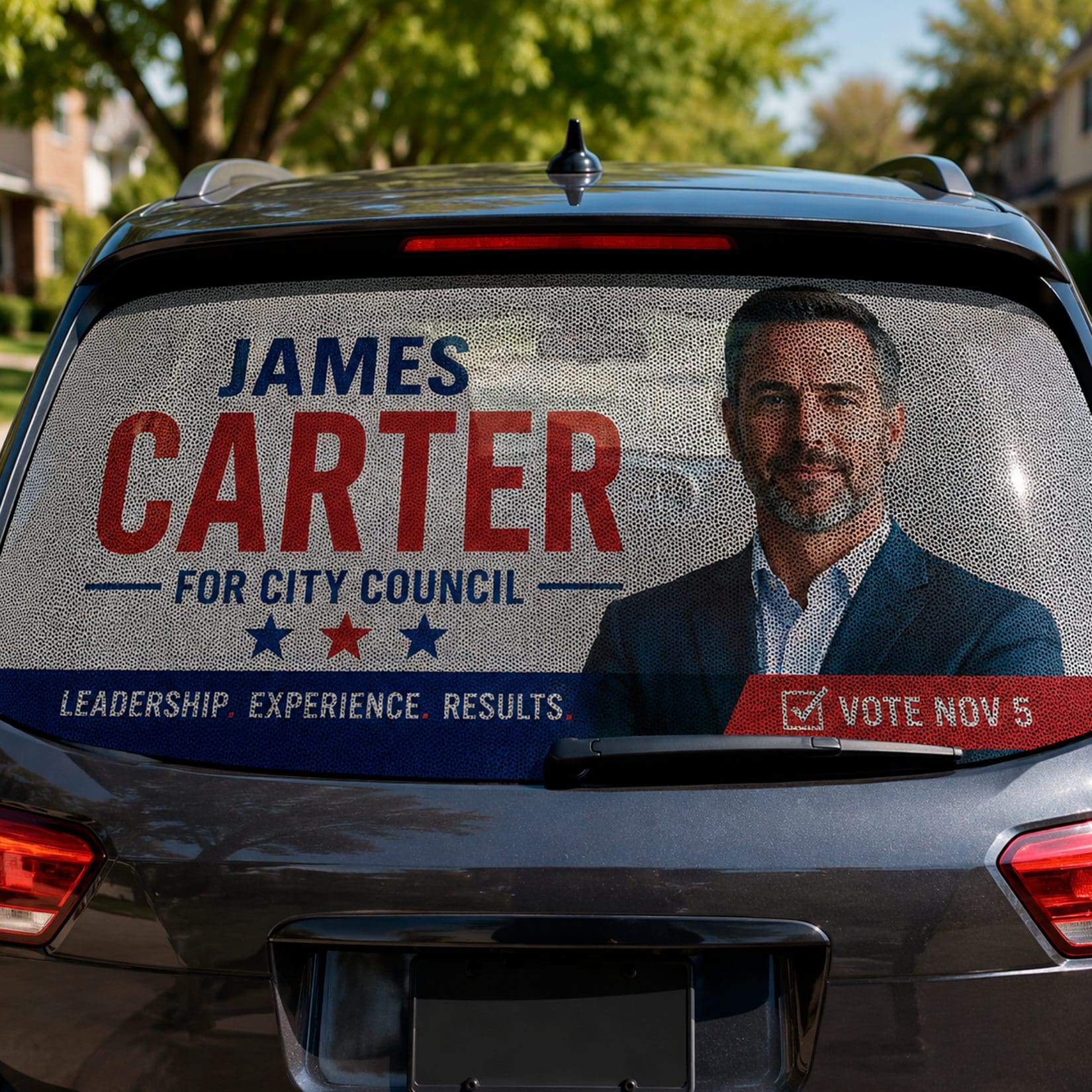
Use perforated window graphics to add full-color branding while maintaining visibility through the glass. A practical choice for rear-window advertising, logos, promotions, and contact information.
FOR TRUCKS & TAILGATES
Tailgate Decals
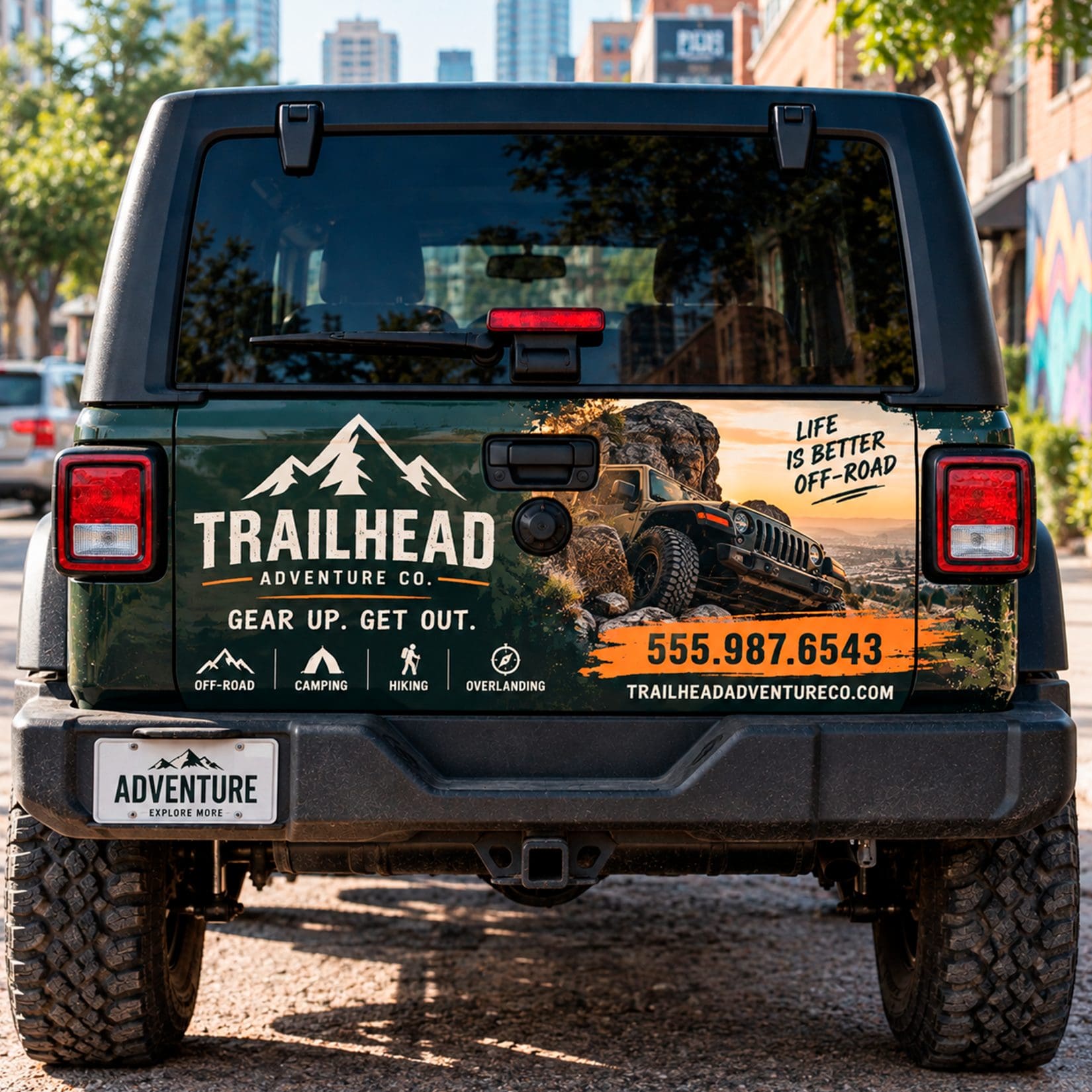
Turn the rear of a truck into dedicated advertising space with a custom vinyl tailgate graphic. Add your branding, business information, promotional message, or favorite image where drivers behind you can see it.
FOR SIDE & REAR PANELS
Van Stickers
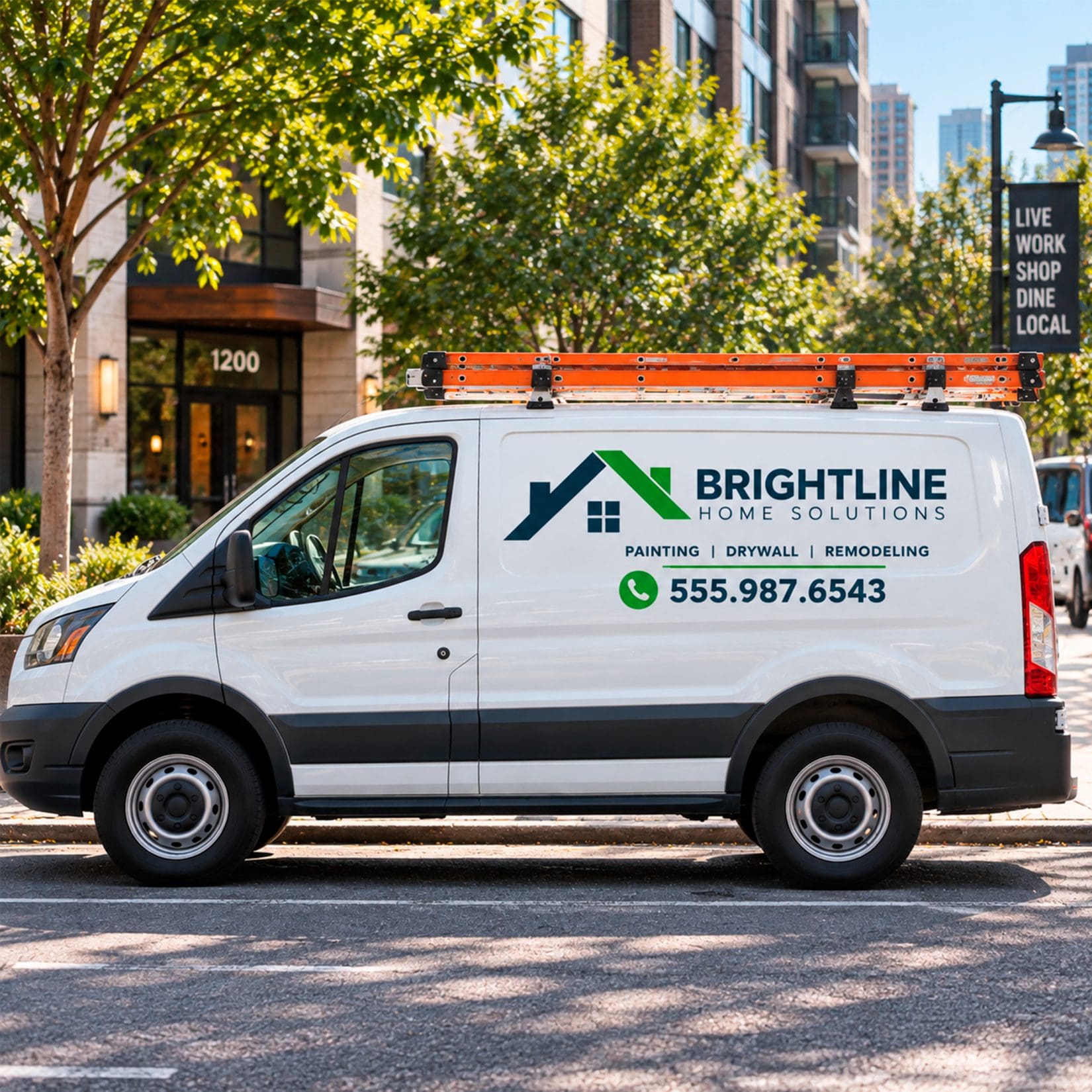
Add logos, contact details, or larger graphics to van doors and body panels without committing to a full wrap. Ideal for service businesses that want clear, professional branding on their work vehicles every day.
A vehicle wrap earns its cost through repetition: the same message, seen by the same neighborhood, hundreds of times a month, for years. That only pays off if the design holds up, which means high contrast, legible type sized for real reading distance, a layout that respects the vehicle’s shape, and print-ready images that won’t blur at door-panel size.
These wrap design tips apply to any style, whether it’s a full wrap, a partial, or window graphics with one clean message, because the goal is the same: design for the two or three seconds someone actually has to read it. For how the same principles apply off the road, see our guide to commercial building signage.
Ready to turn your vehicle into a mobile billboard that works? Get a custom vehicle wrap design quote today →, and we’ll help you build one people remember.