Are Promotional Wall Calendars Effective for Marketing?
Yes, and the reason is simple: promotional wall calendars earn a spot on someone’s wall for 365 days. No other marketing material gets that kind of guaranteed real estate. A flyer gets tossed. A business card gets buried in a drawer. A calendar, if it’s useful and well-designed, gets hung up in a kitchen, garage, break room, or office and looked at almost every single day.
That’s the core advantage of promotional wall calendars: repetition without effort. You’re not paying for another ad impression or hoping someone opens an email. You’re relying on a simple human habit — checking the date — to put your business name in front of the same person dozens of times a month.
Why Wall Calendars Work as Marketing
The real advantage isn’t simply that a calendar carries your logo. It’s that a useful calendar can keep your business visible in the same home, office, garage, or workplace for an entire year.
THE CALENDAR MARKETING FORMULA
Useful Enough to Keep. Branded Enough to Remember.
01
MAKE IT USEFUL
Give people a reason to keep it. Readable dates, writing space, reminders, and genuinely useful information turn a giveaway into something people actually use.
02
KEEP IT VISIBLE
Design for the wall, not just the screen. The right size, strong contrast, and information you can understand at a glance help the calendar earn its place.
03
STAY REMEMBERED
Use consistent colors, recognizable branding, and contact information in predictable places, so repeated exposure quietly reinforces who you are.
The goal isn’t to make your advertisement look like a calendar.
It’s to make your calendar useful enough to keep your advertisement on the wall.
But effectiveness depends on how the calendar is designed and used. A calendar that’s cluttered, hard to read, or just a logo slapped on stock photos won’t stay on display for long. The businesses that get real value from promotional wall calendars treat them like a genuine marketing tool, not an afterthought giveaway.
Here are 10 tips to help you do that.
1. Pick a Calendar Size That Matches Where It Will Hang
Before you design anything, think about where the calendar will actually live. A calendar meant for a home kitchen or office wall works well as a standard 11×17 inch annual wall calendar that covers all twelve months in one hanging piece. A calendar meant for a cramped space, like next to a cash register or on the inside of a supply closet door, does better as a smaller format.
Many businesses choose a size based on print cost alone, and that is a mistake. A calendar that’s awkward to hang in the space it’s given won’t survive past January, no matter how nice the design is.
2. Make the Date Grid the Hero, Not Your Logo
Your logo matters, but the calendar grid is the reason someone hangs it up in the first place. If the numbers are small, cramped, or hard to read from a few feet away, people will stop using it and switch to their phone instead.
Design Principle to Remember
The human eye needs contrast and size to read quickly at a glance. Use a clean, bold font for the date numbers, plenty of white space in each day box, and strong contrast between the numbers and the background. Your branding should frame the calendar, not compete with it.
3. Use One Consistent Brand Color Throughout
A calendar that changes color schemes every month looks disorganized, even if each individual month looks fine on its own. Consistent color exposure also helps reinforce brand recognition. Pick one or two brand colors and carry them through all twelve pages, whether that’s in the header bar, the day-of-week labels, or a border accent.
This is also why generic stock calendar templates can be a poor fit for business marketing. They’re often built for visual variety, not brand consistency.
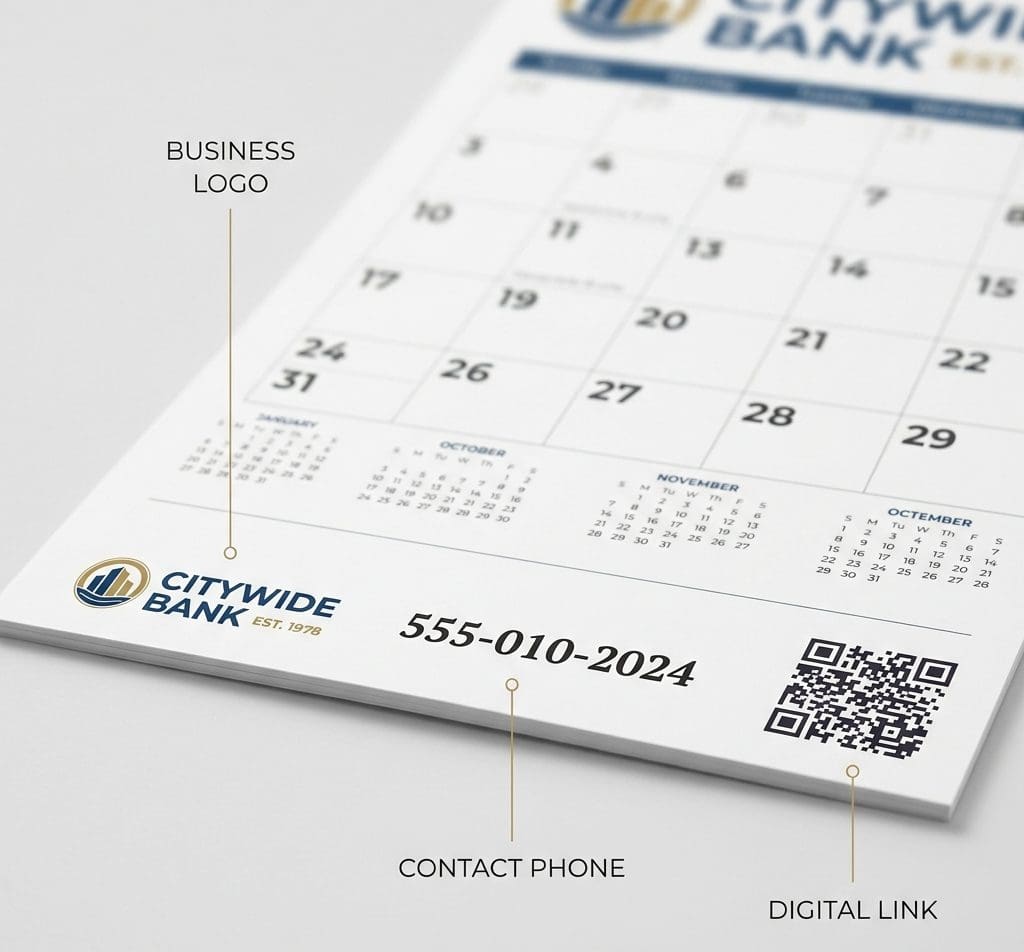
4. Put Your Contact Information Where It’s Actually Usable
This sounds obvious, but it’s one of the most commonly missed opportunities. If someone is looking at your calendar to schedule an appointment or place an order, make sure your phone number, website, or booking link is visible without them having to search for it.
Place this information in the same spot every month, ideally in the footer, so it becomes a familiar, expected part of the page. Someone who’s used your calendar for eight months will know exactly where to look when they finally decide to call you.
5. Include Something Useful Beyond the Date Grid
The calendars people keep longest offer more than just dates. This could be a seasonal maintenance reminder for a home services company, a “did you know” tip from a dental office, or a simple checklist relevant to your industry.
This single addition is often what separates a calendar that gets tossed after a glance from one that becomes a genuine reference tool. It gives the reader a reason to actually read the page, not just glance at the numbers.
Turn Every Month Into a Marketing Opportunity
Think beyond your logo. Monthly tips, reminders, QR codes, seasonal offers, service schedules, important dates, and useful industry information can make the calendar more valuable to the customer while creating natural opportunities to promote your business.
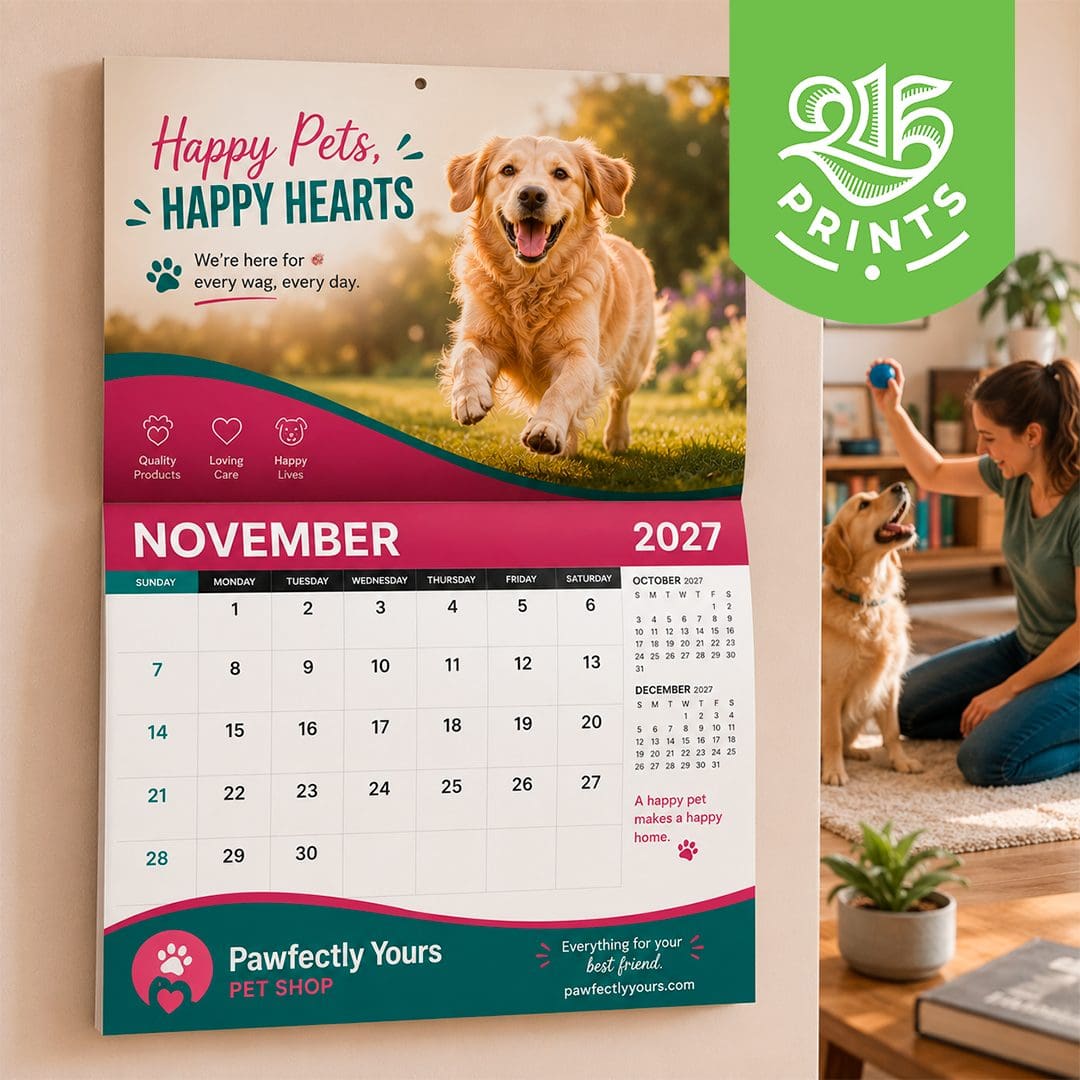
6. Tie Design Themes to Your Industry, Not Generic Stock Photos
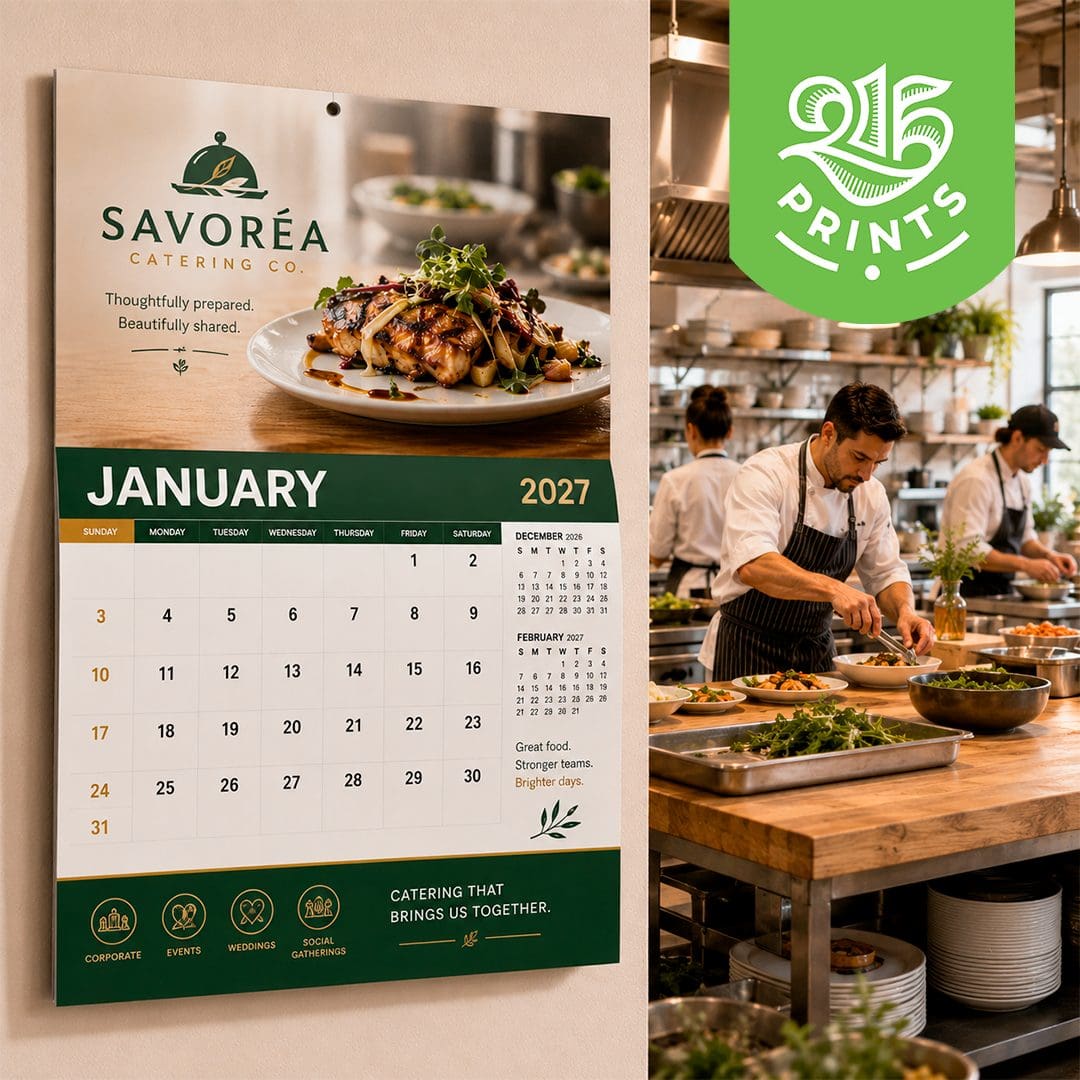
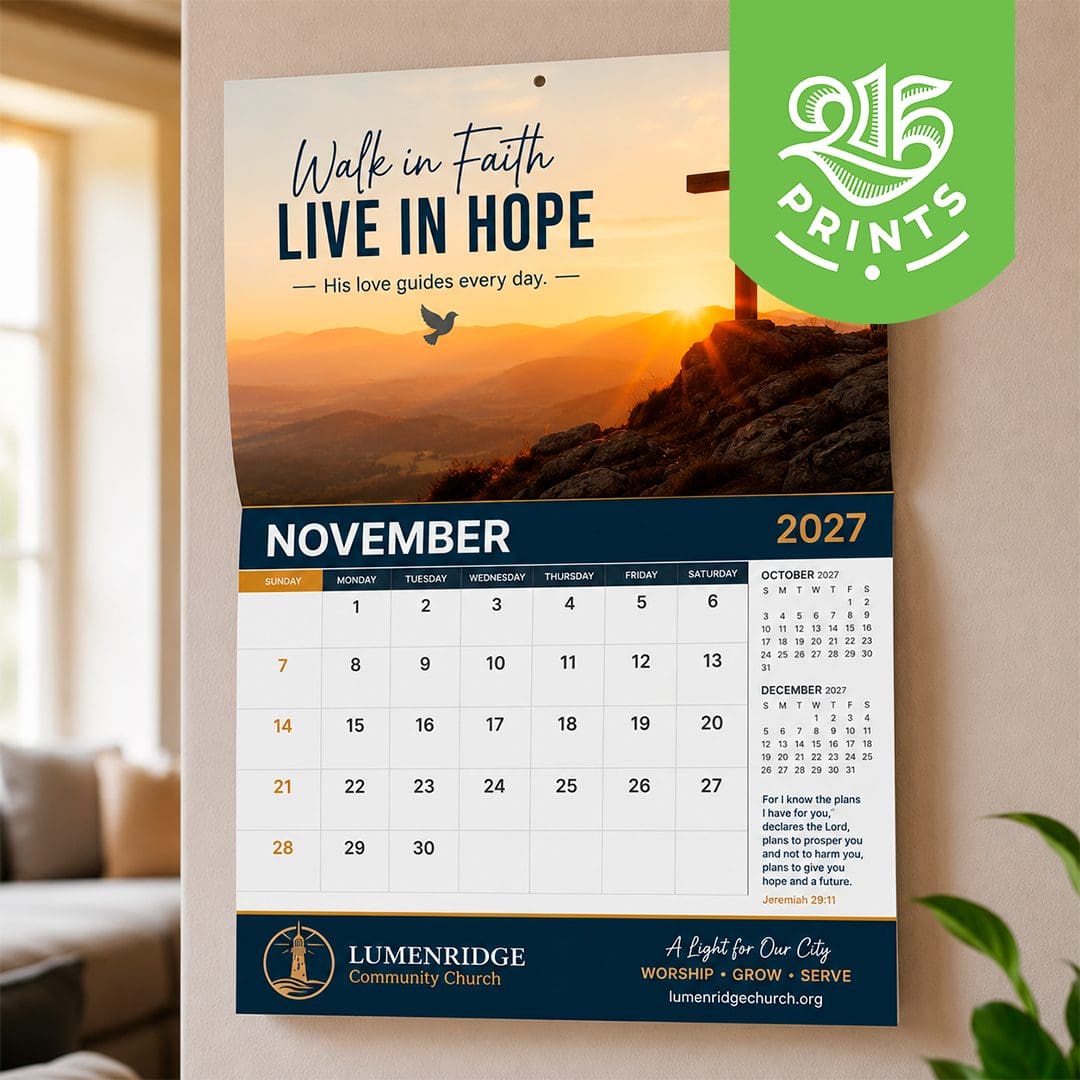
A landscaping company using generic beach photography sends a mixed message. A restaurant using unrelated corporate clip art does the same. Choose imagery, colors, and themes that reinforce what your business actually does. A contractor might use project photos from real jobs. A boutique might use seasonal product shots.
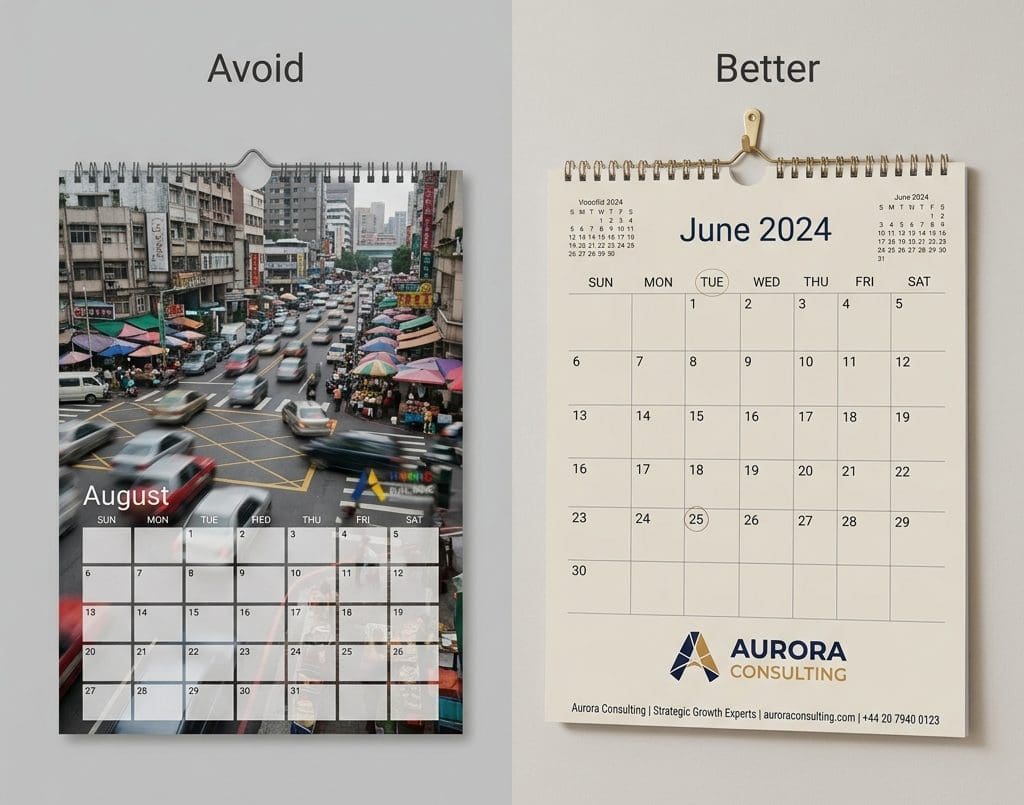
This reinforces brand memory. Every time someone glances at the calendar, they should be reminded of exactly who you are and what you offer, not left wondering why there’s a photo of a mountain range on a plumbing company’s calendar.
7. Distribute Them Where They’ll Actually Get Hung Up
Handing out calendars randomly wastes print budget. Target locations and moments where a calendar is genuinely welcome: year-end client gifts, checkout counters during the holiday season, local events, or as a thank-you with a completed service.
Businesses that get the best return usually distribute calendars to existing or repeat customers first. These are people who already trust the business and are more likely to actually hang the calendar up rather than toss it.
8. Time Your Distribution for Late November Through Mid-December
This window makes practical sense. Most people start thinking about next year’s calendar in late November, but haven’t committed to one yet. Distribute too early, in September or October, and your calendar competes with an old one still in use. Distribute too late, into January, and many households have already put something else up.
Best Distribution Window
Aim to have your promotional wall calendars in customers’ hands by the first two weeks of December. The goal is to arrive when people are ready to replace the old calendar but before another business, organization, or retailer claims that space on the wall.
9. Leave Room for the Reader to Actually Use It
An annual wall calendar covered edge to edge in branding and promotional text leaves no space for someone to jot down an appointment or a birthday. That defeats the purpose. Day boxes should be large enough for handwritten notes, and the overall design should feel like a functional tool first, an advertisement second.
Function First, Advertising Second
Ironically, the less “salesy” a promotional wall calendar feels, the more likely it is to be used and displayed long term. More use means more consistent exposure for your brand.
10. Step Back and Look at It as a Whole
Before you send your calendar to print, look at it the way a customer would: from a few feet away, in passing, not up close. Can you read the date numbers instantly? Do your brand color and logo feel consistent from January to December? Is anything cluttered or crowded in a way that would make someone want to take it down after week one?
This kind of final review is the difference between a calendar that gets used all year and one that gets replaced by January. You now have what you need to design a calendar that’s clean, readable, and genuinely worth hanging up—the sizing logic, color consistency, and layout principles covered here.
FROM IDEA TO PRINT
Ready to Turn Your Calendar Into a Marketing Piece?
If you’d rather skip the layout work and printing logistics, 215 Prints can help turn your branding into promotional wall calendars that are ready to hand out, hang up, and keep working throughout the year.